
The Real Cost of a Manual Handling Injury in Electromechanical Assembly
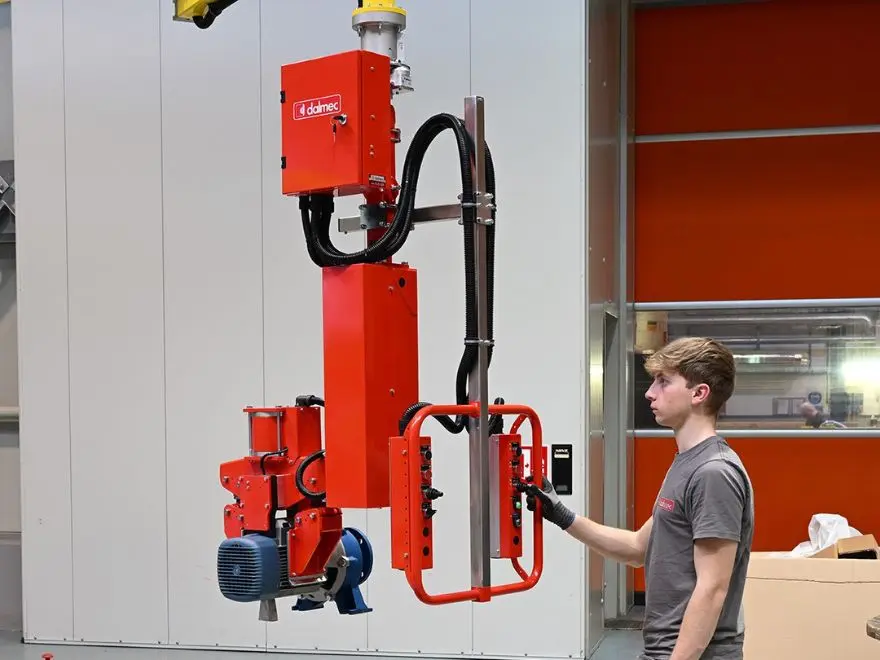
The Real Cost of a Manual Handling Injury in Electromechanical Assembly Home News Published by Vertical Lift Machines | September 2026 | Category: WHS / Manual Handling A claim is not the cost. It is the invoice for a cost the task was charging you all along. The motor weighs 45 kilograms. By the time the claim it causes is closed, it will be the cheapest thing involved. Electromechanical plants are full of parts like it. The wound stator the size of a spare tyre and more than twice the weight. The compressor that fits between two hands and pulls a back out through sheer density. The gearmotor with no grip points that gets carried against the chest because there is no other way to hold it. None of them look like a lifting problem. All of them are, because copper and steel pack more weight into less space than almost anything else made in a factory. So the lift never gets engineered. It looks like a carry, it gets treated like a carry, and it runs two hundred times a shift until the day it does not. Then the costs start arriving, and they do not stop at the claim. What one injury actually costs Talk to any plant that has been through a serious lifting injury and the claim itself is rarely what they remember. It is the stack that came with it. There is the claim. Then the lost time, and it is almost never a spare pair of hands that goes down; it is the experienced assembler whose output the bench was quietly built around. There is the premium that moves at renewal and stays moved for years. The overtime and labour hire covering the gap, usually at a higher rate than the wages they replace. The investigation, the reporting, the corrective-action paperwork, all of it landing on the same supervisors who are already covering the roster hole. And there is the quiet cost that never gets a line in any ledger: the rest of the team is now wary of the same task. The lift slows down. The informal two-person rule appears, which means two people are now tied up on a job that officially needs one. Throughput pays for the injury long after the claim is closed. It was never bad luck The instinct after an injury is to treat it as an event: something that happened, on a day, to a person. On a dense-load task that framing is wrong, and it is expensive. A hazardous manual task is defined by force, posture, repetition and duration. A compact 40 kilogram part carried close to the body, placed precisely, hundreds of times a shift, scores on every factor at once, and it does so on every cycle, not just the one that ends in a claim. The exposure was on your books the whole time. The injury is simply the moment it converts into an invoice. That is also why the fix is not another toolbox talk. We covered in an earlier article why a risk assessment on its own is not enough – admin controls change the paperwork around the lift, and PPE changes what the operator wears during it. Neither changes the lift. On a task that is dense, precise and repeated, only an engineering control does. The task runs two hundred times a shift. The injury was never bad luck. It was scheduled. Cost the task before it costs you You do not need an incident to put a number on the exposure. You need one walk of the line and three numbers per task: the load weight as the part is actually handled, the movement required, described as verbs and angles, and the lifts or placements per shift. Mark every station where a part is dense, carried close to the body, placed precisely, or quietly handled by two people. Those marks are your shortlist. Then, for the worst one, write the stack next to it: what a claim on this task would cost, whose lost time it would be, what the backfill looks like, what it does to the line’s pace. Most plants have never written that number down. It is usually the most persuasive document the site’s WHS case has ever produced, and it speaks the language your obligations are written in: the Safe Work Australia guidance on hazardous manual tasks is built around identifying force, posture, repetition and duration in the task, before harm occurs, not after. Bring the operators on the walk. The spec sheet says what the part weighs; the person who moves it two hundred times a shift knows which lift they feel at knock-off, which placement gets less square by mid-afternoon, and which job quietly became a two-person task without anyone writing it down. Their answers are the difference between a paper exercise and a shortlist your floor already agrees with. They are also the beginning of operator acceptance, which will decide later whether any control you install actually gets used. Be honest about the recurring costs while you write the stack. A premium does not move once; it moves at renewal and takes years of clean history to come back. Backfill labour is bought at market rates on short notice, not at the wages it replaces. And the slowdown around the task rarely ends when the injured person returns, because the informal two-person rule tends to stay. None of this needs to be forecast to the dollar. Written next to one task in plain language, it is already the clearest picture of exposure most sites have ever had. What removes the exposure: an engineering control Once the stack is written down, the hierarchy of control says what to do about it. A pneumatic industrial manipulator is an engineering control for exactly this class of task: the machine carries the full weight of the part, and the operator guides it with one hand. Grip strength, fatigue and posture stop being what holds the
Near Misses in Chemical and Drum Handling: The Injury Data You Are Not Collecting
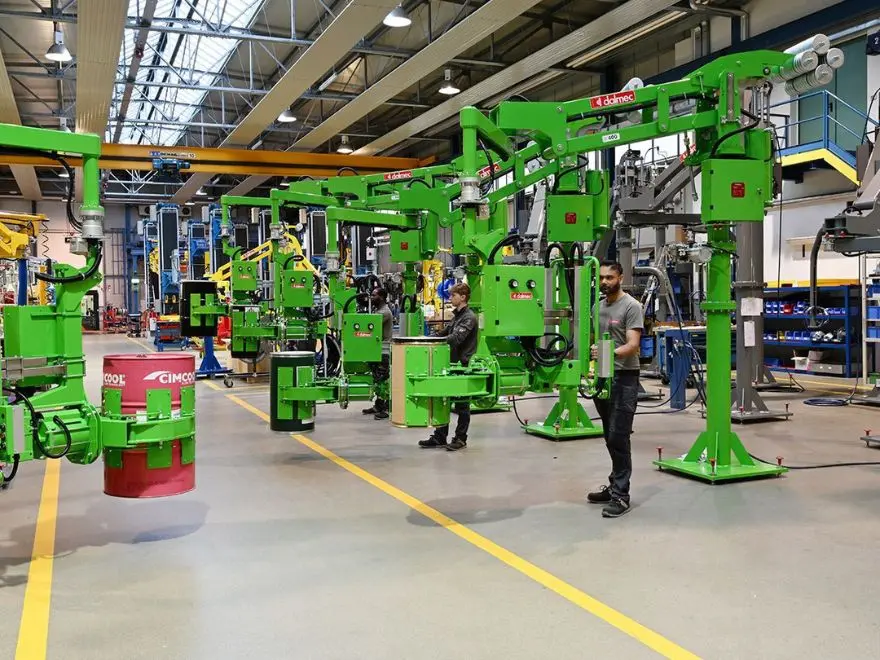
Near Misses in Chemical and Drum Handling: The Injury Data You Are Not Collecting Home News Published by Vertical Lift Machines | August 2026 | Category: WHS / Manual Handling A near miss is not evidence the system worked. It is evidence the injury is already in the post. Nobody writes up the drum that nearly went over. The grip that gave for half a second on a wet chime. The drum steadied against a thigh halfway through a tip. The second operator who stepped in because the angle looked wrong from across the bay. The IBC that swung wider than anyone expected coming off the forks. On a chemical or drum-handling floor these happen every week, and almost none of them make it into a report, because the form is for injuries and nobody was injured. So the incident register stays clean while the same task keeps producing the same moments, shift after shift. The paperwork says the floor is safe. The floor is saying something else. This is not a reporting-culture lecture. It is a measurement problem, and it has a practical fix: treat near misses as data, collect them for one month on one task, and let the count make the case the injury statistics cannot make until it is too late. What a Near Miss Looks Like in Drum Handling The textbook near miss is a dropped load that lands next to a boot. Real ones are quieter. On chemical and drum-handling tasks they look like this: A grip that slips and is caught – the drum is wet from washdown, oily from the line, or heavier than the label says because the product has settled. A drum steadied against the body – controlled with a hip or thigh halfway through a tip because two hands are not enough to hold the angle. An unplanned second person – someone jumps in mid-lift because one operator clearly cannot land it. Not a rostered team lift; a rescue. A rushed placement – the drum lands on the pallet or in the bund harder than intended because holding it any longer was not an option. A changed technique late in the shift – the lift that was done properly at 7am is done differently at 2pm, to spare a wrist or a back that is already feeling it. None of these produce an incident report. All of them are the same event as an injury claim, minus the timing. The force, the posture and the fatigue were all present. The only thing missing was the half-second where it goes wrong. Lagging Indicators Count Your Injuries. Leading Indicators Predict Them Most WHS reporting on chemical and drum-handling floors runs on lagging indicators: lost-time injuries, claims, days off work. They are accurate, auditable, and useless for prevention, because by the time a lagging indicator moves, the injury has already happened. Near misses are the leading indicator for manual handling, and regulators treat hazardous manual tasks as a risk to be managed before harm occurs, not after – the Safe Work Australia guidance on hazardous manual tasks] is built around identifying force, posture, repetition and duration in the task, not around waiting for a claim. A near miss on a drum lift is those risk factors photographing themselves a moment before the injury. Enough of them, on the same task, is not a run of luck. It is a schedule. One Task, One Month: How to Collect the Data You do not need a new reporting system, a software platform or a culture program to start. You need a clipboard, one task and one month. Pick the handling task your own people already talk about – the drum off the pallet and into the bund, the pour into the mixing vessel, the pails up to the mezzanine, the bags of powder into the hopper. Then count, for one month, four things: near-drops, loads steadied against the body, unplanned second-person assists, and visible changes of technique late in the shift. Tell the crew what you are counting and why. They will tell you things the count misses. At the end of the month you have something the incident register cannot give you: a number that describes the task, not the casualty. That number belongs in the risk register against the task, and it converts directly into the language your WHS obligations are written in – evidence that the hazard is known. You do not need an injury to prove the task is dangerous. The task has been telling you all month. What the Count Justifies: An Engineering Control Once the near-miss count says the task is a matter of time, the hierarchy of control says what to do about it. Admin controls – procedures, toolbox talks, rotation – change the paperwork around the lift. PPE changes what the operator wears during it. Neither changes the lift. An engineering control does. A pneumatic industrial manipulator is an engineering control for exactly this class of task: the machine carries the full weight of the drum, and the operator guides it with one hand. A tired grip cannot drop a load it is not holding. That is what our Dalmec industrial manipulators do on chemical and drum-handling floors: drums off pallets and into bunds, controlled tipping into mixing vessels, pails and kegs between stations, and containers on and off the line. The tooling is engineered to the part – chime grippers and parallel jaws for drums, controlled-tipping tooling for pours, clamp tooling for pails and kegs – and the balancing is tuned so the load floats and the operator only steers. The near-miss mechanisms disappear because the operator’s strength, grip and fatigue are no longer what holds the drum in the air. Where the movement is the hazard – rotation, tilting, precise placement – the engineering approach to the whole handling task covers that too: the rotation is pneumatic, the tilt is controlled, the placement is guided. Solved Before, at Scale Drum handling is not a
Manual Handling on Vehicle Assembly Lines: Why a Signed SWMS Is Not a Control
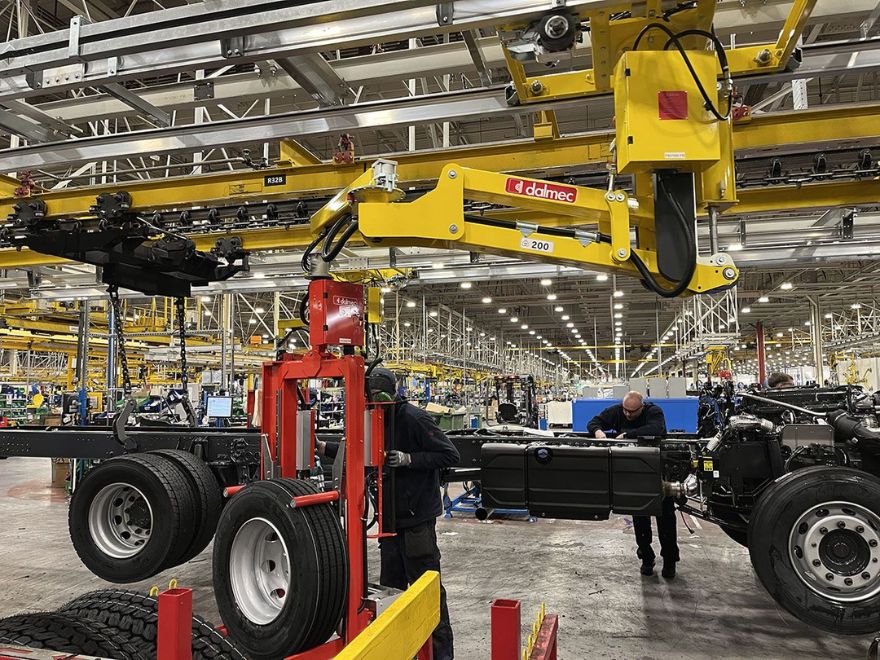
Manual Handling on Vehicle Assembly Lines: Why a Signed SWMS Is Not a Control Home News Published by Vertical Lift Machines | July 2026 | Category: WHS / Manual Handling A signed SWMS is not a controlled risk. It is a documented one. Under the WHS Act, those are not the same thing. Building a truck, a bus or a trailer is heavy work by design. Seats go in flat and come out vertical. Wheel-and-tyre assemblies run 60 to 80 kilograms and get lifted to the hub dozens of times a shift. Axles are rotated and placed by hand. Leaf springs are tilted into suspensions. EV battery packs are among the heaviest single parts on the vehicle. On most lines the paperwork around that work is clean: the risk assessment is current, the SWMS is signed, the rotation roster is on the wall. None of that is what a WorkSafe inspector assesses after a manual handling injury. They assess whether the hazard was controlled. On a vehicle line, the gap between a documented hazard and a controlled one is usually where the claim came from. This is not a documentation problem. It is a control problem. And the WHS Act is unambiguous about which one it requires. What the WHS Act Requires for Manual Handling on a Vehicle Line The WHS Act does not ask whether each lift was within a recommended weight limit, or whether your operators were trained, inducted and rostered through a rotation schedule. It asks whether you took all reasonably practicable steps to eliminate or minimise the risk. “Reasonably practicable” is a practical test, not an aspirational one. It weighs the benefit of a control against the cost of implementing it. For a repetitive heavy lift performed across a full shift on a vehicle line, an engineered handling solution spread across its service life is rarely disproportionate to the injury risk, the WorkCover exposure and the throughput inconsistency the manual task keeps generating. What a WorkSafe inspector assesses after a musculoskeletal injury claim is not whether the paperwork was in order. It is whether the employer knew the task created a risk, and whether they implemented the most effective control that was reasonably practicable. A rotation schedule and a signed SWMS do not settle that question in the employer’s favour when a mechanical solution was available. In practice, the first documents an inspector asks for are the risk assessment that identified the task and the record of what was done about it. A gap between the two is the finding. Why a SWMS and a Rotation Roster Are Not Controls A risk assessment identifies a hazard. A SWMS describes how to perform it. A rotation roster shares it around. None of the three reduces the hazard in the task itself. This matters on a vehicle line because the tasks are so repeatable. The lifts that show up on nearly every line: Seats – arrive flat, go in vertical through a narrow door, without scuffing trim. Light to lift, hard to place cleanly by hand, shift after shift. Wheels and tyres – 60 to 80 kg assembled, lifted, rolled and aligned to the hub, often two people, dozens of times a shift. Axles – heavy, and they have to be rotated and placed precisely onto a bench or into the vehicle. Leaf springs – long, heavy and awkward, needing a tilt to fit a heavy-vehicle suspension. EV battery packs – among the heaviest single parts on the vehicle, placed into the chassis to the millimetre. Rotate more operators through any of those and you have not reduced the risk. You have exposed more people to it. That is a scheduling decision, not an engineering control, and an inspector reads it that way. Where a Manipulator Sits in the Hierarchy of Control The hierarchy of control ranks risk management from most to least effective: Elimination Substitution Engineering controls Administrative controls – rotation schedules, training, SWMS, induction Personal protective equipment A risk assessment does not appear on that list. It precedes it – it identifies the hazard the hierarchy then has to address. When the assessment confirms a repetitive vehicle-line lift creates musculoskeletal disorder (MSD) risk, the Act requires you to implement the most effective control that is reasonably practicable. Engineering controls sit at level three. Administrative controls sit at level four. If a mechanical solution is available and affordable, documenting a rotation schedule does not substitute for it. A Dalmec pneumatic manipulator is an engineering control. It physically changes the task: the machine carries the weight, the operator guides the load. That is the difference between managing a hazard on paper and removing it from the task. What a Vehicle Assembly Line Demands From an Operator A vehicle assembly line is engineered for consistent throughput. It runs at the same pace in hour eight as in hour one. The battery pack does not get lighter as the shift goes on. The placement tolerance on a seat or an axle does not widen because the operator is tired. But the operator changes. Take a wheel-and-tyre station. A 70 kilogram assembly, lifted from a stillage, rolled to the hub, held level and aligned to the studs. At 7am it is a two-person job done cleanly. By the fortieth wheel the grip is tireder, the back rounds a little earlier, and the alignment gets rushed because the line does not slow down. Multiply one station by a shift, and a shift by a year, and the cumulative load on that team is enormous, none of it visible in the paperwork. Fatigue on a repetitive lift does not present as obvious exhaustion. It presents as small, invisible adjustments: a grip that shifts to spare a sore wrist, a lift that shortcuts a rotation to save the back, a pace that slips because holding the designed cycle time across eight hours is no longer physically possible. These adjustments are not a discipline issue. They are the MSD claim in progress – invisible