

Steel Handling Reinvented: How Smart Lifting Is Changing Fabrication Floors
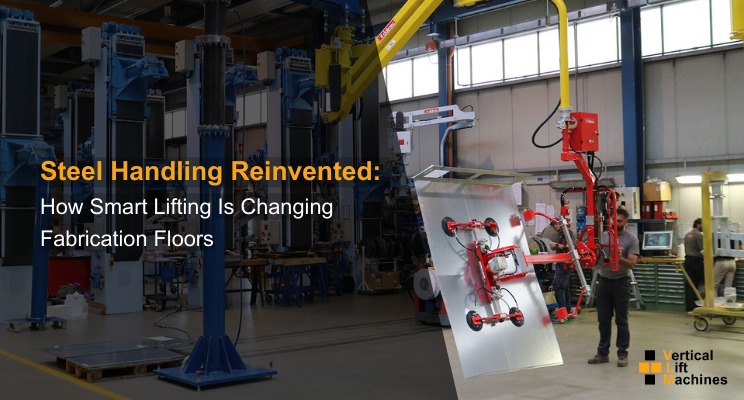
Home News Steel fabrication has always been about strength. But behind every beam, plate and sheet is work that demands far more than brute force. Steel is heavy, awkward and unforgiving. It flexes when lifted, shifts when rotated, and punishes poor control. Day after day, operators are expected to move it safely, precisely and repeatedly. That is where smart lifting changes the conversation. Rather than asking people to absorb the weight of steel through their bodies, industrial manipulators remove the physical load while preserving control. The result is safer handling, better accuracy and workflows that feel sustainable rather than exhausting. It is a shift that aligns not only with productivity goals, but also with recognised ergonomic and manual handling guidance such as NOHSC:2005 (1990). The real problem with steel is not just the weight Ask anyone on a fabrication floor and they will tell you the same thing. Steel handling is not only about how heavy a load is. It is about how unpredictable it can be. Large plates flex. Thin sheets behave differently to thick ones. Long beams demand balance through every movement. When these tasks are done manually, operators compensate with their bodies. Over time, that compensation shows up as fatigue, strain and injury. It also shows up in slower cycle times, damaged material and costly rework. Modern safety frameworks recognise this reality. Where high-risk manual handling exists, the expectation is not better technique alone, but mechanical assistance that reduces exposure at the source. What smart lifting actually looks like on the floor Smart lifting does not replace skill. It removes unnecessary physical effort so skill can be applied properly. Industrial manipulators use pneumatic balancing to neutralise the weight of steel components. Operators guide the load with light, controlled movement rather than force. Lifting, rotating and positioning become smooth and predictable actions. This is why industrial manipulators for precise and safe material handling are increasingly adopted in environments where control matters as much as strength. Instead of two people wrestling with a steel plate, a single operator can position it accurately. Instead of fatigue dictating the pace of work, consistency is maintained across the entire shift. Safety improves when effort is removed, not when people try harder One of the biggest misconceptions in industrial environments is that safety improves through awareness alone. In reality, safety improves when physical strain is designed out of the task. By removing load weight from the operator, industrial manipulators significantly reduce stress on shoulders, backs and wrists. This directly supports ergonomic risk management and aligns with established manual handling principles reflected in standards such as NOHSC:2005 (1990). This approach also delivers measurable commercial value. Reduced injuries mean less downtime, fewer lost-time incidents and improved retention of skilled workers. Ergonomic material handling becomes an investment rather than an expense because it addresses the root causes of risk and inefficiency at the same time Precision and productivity are not trade-offs In steel fabrication, accuracy is not optional. A few millimetres can mean the difference between a clean fit and expensive rework. Smart lifting supports precision by giving operators controlled movement across multiple axes. Steel components can be aligned, rotated and placed without sudden shifts or overcorrection. This improves quality while also speeding up the process. When effort is reduced, motion becomes more efficient and cycle times shorten naturally. In many operations, tasks that once required two people can be completed by a single operator in a fraction of the time, without increasing risk or fatigue. Designed around real fabrication workflows No two fabrication floors are identical. Steel handling varies by size, thickness, shape and stage of production. Effective lifting systems must adapt to that reality. Dalmec manipulators are engineered around real workflows, not generic assumptions. Solutions such as the Dalmec Partner EQUO are designed to handle heavy and off-centre steel loads while maintaining balance and intuitive control throughout the lift. This adaptability allows lifting systems to integrate seamlessly into existing processes, supporting productivity without disrupting established workflows. For teams planning or reviewing steel handling processes, the Steel Fabrication interactive resource page brings together application-specific images and videos in a format that can be explored visually. Users can scroll through real steel fabrication images and watch videos to better understand how different lifting solutions are applied across fabrication workflows before moving into detailed design discussions. Supporting people as well as production When the physical strain of steel handling is reduced, the benefits extend beyond injury statistics. Operators experience less fatigue. Confidence improves. Skilled workers remain productive for longer and demanding roles become more sustainable. Smart lifting systems support compliance, but more importantly, they support people. They allow experience and skill to be applied consistently without being limited by physical wear. A smarter way forward for steel handling Stealing the weight from steel is not about automation for its own sake. It is about creating safer, more precise and more sustainable fabrication environments. By combining ergonomic design, controlled movement and application-specific engineering, industrial manipulators change how steel handling feels on the floor. The work flows better. Risk is reduced. Results improve. To explore how smart lifting could improve safety and efficiency in your steel fabrication operation, visit our solutions page and speak with our team.
7 Essential Questions to Ask When Choosing a Material Handling Partner
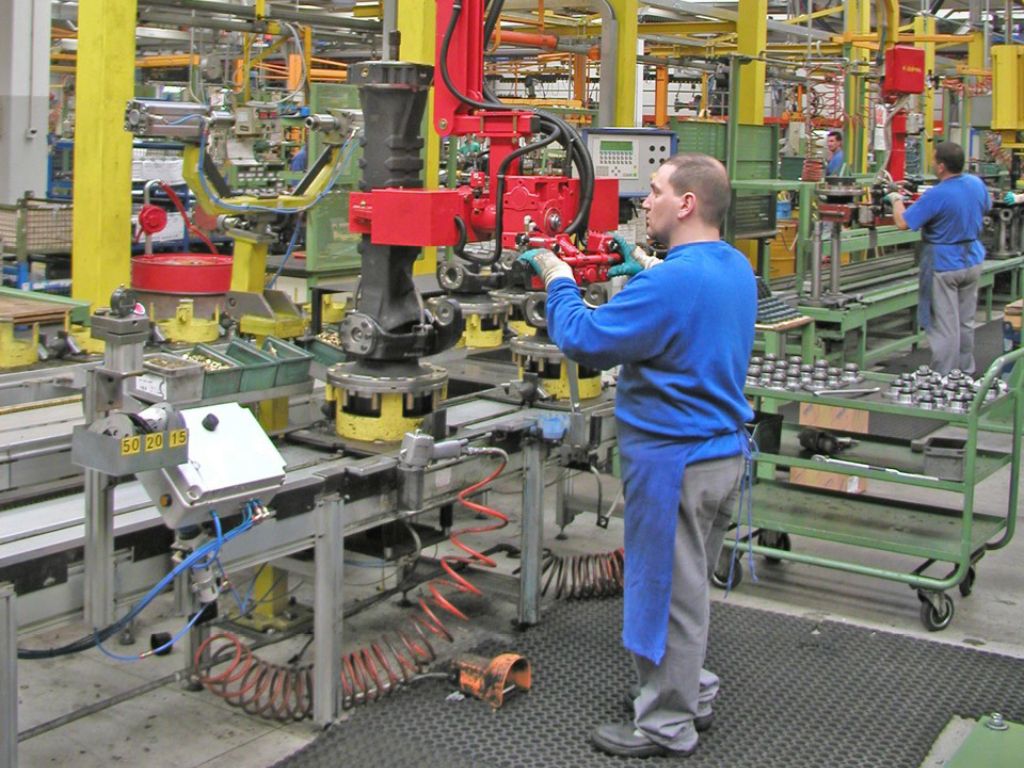
Home News Choosing the right material handling partner can dramatically improve safety and productivity in your operation. By asking the right questions up front, you’ll ensure any lifting solutions you invest in actually solve your challenges and boost your bottom Line. For operations managers and plant engineers, the start of a new year is a critical time for strategic planning. You’re likely evaluating workflows, pinpointing bottlenecks, and looking for ways to improve safety and production efficiency. If heavy, awkward, or fragile loads are part of daily life on your factory floor, you might be considering new safe material handling methods or lifting solutions (like industrial manipulators) to protect workers and streamline work. But selecting the right material handling partner is just as important as choosing the right equipment. There are plenty of off-the-shelf hoists and lifters out there, but a generic gadget rarely delivers true improvement. Real gains come from partnering with a provider who understands your unique environment and can tailor a solution to fit. Below, we outline seven key questions to ask any potential partner. These go beyond simple pricing and lead times – they dig into the engineering depth, safety features, and long-term support a provider will bring to your facility. 1. Will the Solution Be Customised for Your Product’s Needs? Many suppliers take a one-size-fits-all approach – they’ll ask the weight of your load, check a chart, and recommend a standard hoist or balancer. The truth is, weight is often the easiest variable in material handling. The real challenges are your product’s shape, size, surface texture, fragility, and the exact movements required to lift and place it. If a provider only offers a cookie-cutter device, you risk an ill-fitting solution that doesn’t truly solve your problem. Ask if they can design tooling specific to your item. A true partner looks not just at what you’re lifting, but how it needs to be lifted. Can they create custom end-effectors – the gripping attachments – tailored to your product? For example, lifting a large roll of film by its core or handling a thin-walled stainless steel drum without denting it requires specialised tooling. A basic hook or clamp won’t cut it for these scenarios. Look for deep customisation capabilities: The partner should be able to engineer bespoke gripping tools (e.g. vacuum suction cups, internal expansion mandrels, custom clamps) designed for your product’s exact dimensions and material. Ask about complex manoeuvres: If your process involves flipping a load from vertical to horizontal, reaching over obstructions, or rotating an item to slot it onto a shelf, the system must handle shifts in the load’s centre of mass without becoming unstable. Ensure the provider can accommodate these unique lifting motions in their design. When a supplier builds the solution around your product – instead of forcing your product to fit their standard device – you’ll see gentler handling, less product damage, and faster cycle times. 2. How Will It Integrate into Your Workspace and Workflow? No factory or warehouse is a blank canvas waiting for new equipment. Your facility likely has a crowded floor plan with existing machinery, conveyor lines, structural columns, narrow aisles, and perhaps low ceilings. A lifting device might sound great on paper but prove impractical if it doesn’t physically fit or if it obstructs operations. So, it’s critical to consider how a new manipulator or lift will work within your current layout. A reliable partner will view their equipment as part of your overall workflow – essentially the bridge between workstations – rather than a standalone island. Ask each vendor how they address spatial constraints and what mounting options they offer. For instance, if a supplier only provides floor-mounted systems, they won’t be much help if you need to keep aisles clear for forklift traffic or if floor space is at a premium. Verify mounting flexibility: Can the system be floor-mounted, column-mounted, or ceiling-mounted? Top providers offer options like overhead rail systems or jib cranes that utilise ceiling space to cover large work areas without blocking the floor. If you have narrow aisles or multi-station coverage needs, an overhead running rail manipulator might be ideal. Check vertical adaptability: If your facility has low ceilings or obstacles (like HVAC ducts, pipes, or mezzanines), a standard tall post or gantry may not fit. In such cases, can the partner engineer a low-profile, rigid-arm manipulator that reaches into tight spaces or under obstructions? The solution should adapt to your building constraints – for example, a rigid arm that can dip under a low overhead or a compact mast that fits beneath the ceiling – where a typical cable hoist would fail. By ensuring the equipment is designed for your workspace – not just for the load – you avoid costly surprises at installation. The right device will slot into your operations smoothly, acting as connective tissue that streamlines material flow instead of a bulky addition that gets in the way. 3. Does It Empower Your Operators (Not Replace Them)? In the rush toward automation, it’s easy to assume a fully robotic solution is best for material handling. But in many complex assembly or packing tasks, the human operator is indispensable. There’s no substitute for human judgment when, say, aligning a part during assembly, dealing with inconsistent packaging, or spotting quality issues on the fly. The ideal material handling solution gives your workers the strength and support of a machine while preserving their skill and control. When evaluating a partner, discuss how their technology interacts with the user. You’re not looking to make your workers redundant – you want to augment their capabilities. The manipulator or lifting device should feel like an extension of the operator’s arm, not a clunky robot that isolates them from the task. If the operator feels disconnected or wrestling with controls, productivity and safety can suffer. Prioritise intuitive controls: Look for equipment that is naturally easy to use. The best manipulators allow the operator to guide and position a load with minimal effort
Helping Australian Companies Retain Skilled Workers with Industrial Manipulators
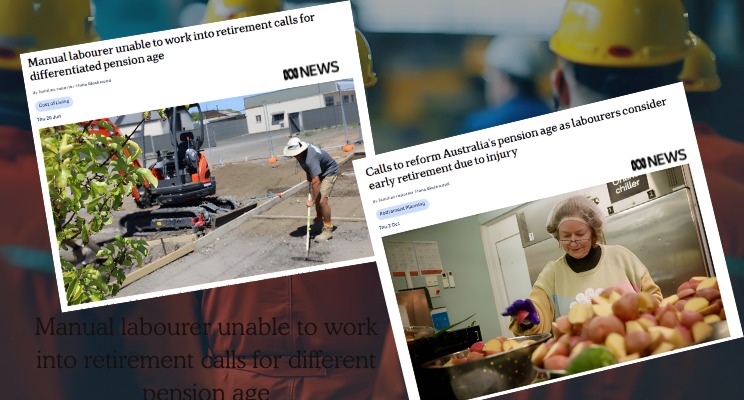
Home News Across Australia, many industries are struggling to find and keep skilled workers. As the pension age continues to rise, conversations are growing around whether reforms are needed for physically demanding jobs. In manufacturing, logistics, and other labour-intensive sectors, employees often handle heavy loads daily. Over time, this repetitive strain can lead to injuries, fatigue, and even early retirement. Skilled workers who would otherwise continue contributing for years are forced to leave because their bodies can no longer keep up with the demands of manual work. This is where industrial manipulators offer a practical and lasting solution. At Dalmec, we design industrial manipulators that take the physical strain out of material handling. Our systems use pneumatic technology and ergonomic designs to lift, tilt, and position heavy items from glass panels to metal components with precision and control. By integrating manipulators into their operations, many Australian companies have seen a major shift in workforce stability. Employees who were once considering leaving due to the job’s physical demands are now able to continue working comfortably and safely. When the heavy lifting is removed, retention improves. Moreover, with the current labour shortage across Australia, retaining experienced workers has become just as important as hiring new ones. Industrial manipulators not only prevent injuries but also help companies maintain productivity and reduce training costs associated with high staff turnover. The discussion around Australia’s pension age highlights a deeper issue: the need to create workplaces where people can work longer, without risking their health. Technology like industrial manipulators plays a key role in achieving that balance by protecting employees and supporting sustainable operations. Work shouldn’t be a reason for early retirement. With the right equipment, it can be safer, smarter, and more rewarding for everyone involved. Looking to create a safer, more sustainable workplace?Visit our website and discover how Dalmec industrial manipulators can help your team.
Safe Glass Handling with Industrial Manipulators
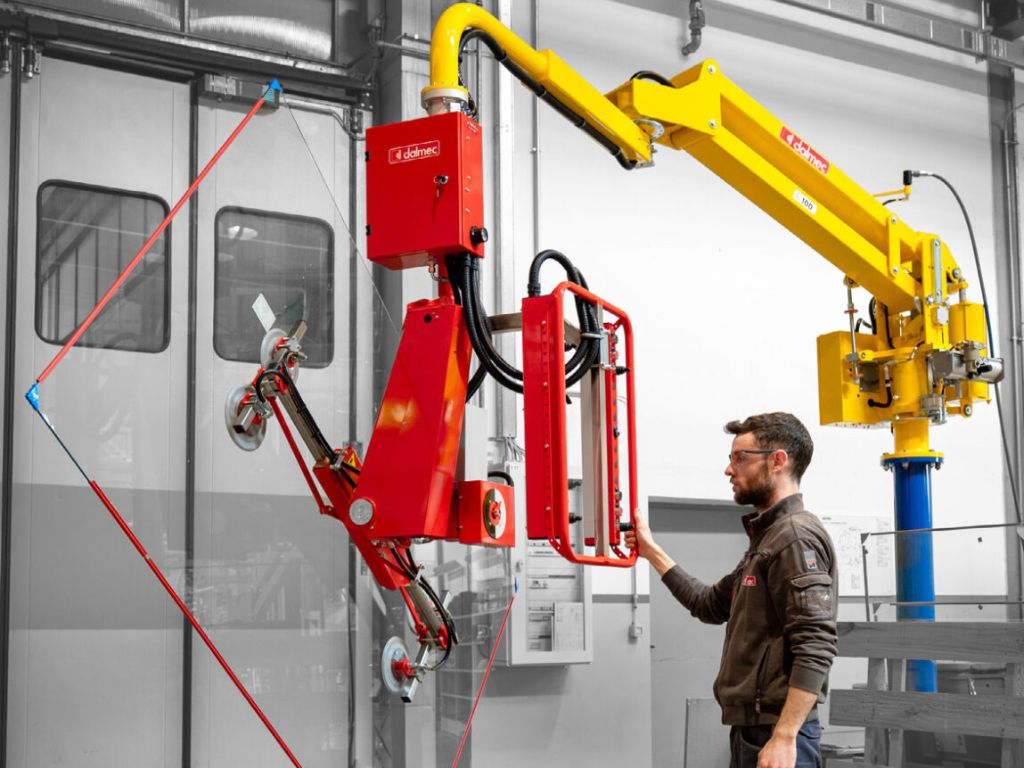
Home News Handling glass sheets is one of the toughest jobs in material handling. Glass is heavy, fragile, and awkward to move. If you rely on manual lifting, workers face serious risks, strains, cuts, and accidents. At the same time, even a small mistake can damage the sheet and cause costly waste. This is why many industries now rely on industrial manipulators. The Challenges of Glass Handling Moving glass sheets by hand is unsafe and inefficient. Workers struggle with sharp edges, uneven weight, and large surfaces that are difficult to grip. As a result, musculoskeletal injuries increase and productivity drops. Moreover, businesses lose money every time a sheet breaks during handling. How an Industrial Manipulator Solves the Problem An industrial manipulator gives operators complete control. Suction cups grip the sheet securely, while the operator tilts, rotates, or positions the glass with precision. Because the machine carries the load, workers stay safe, and the glass remains protected. Furthermore, manipulators adapt easily to different sizes and shapes. Whether you need to move small panes or large sheets, the suction system handles the task with speed and accuracy. Safety and Ergonomic Efficiency With a manipulator, the operator no longer strains to lift or balance heavy sheets. Instead, they guide the material effortlessly. This reduces downtime, prevents musculoskeletal injuries, and improves ergonomics on the work floor. In other words, workers stay healthy while productivity improves. Why Choose Dalmec in Australia For decades, Dalmec has delivered customised industrial manipulators in Australia and worldwide. Our pneumatic, non-electric systems combine safety, precision, and efficiency. As a result, businesses across construction, automotive, and manufacturing trust us for smooth and reliable material handling. A Smarter Way Forward When it comes to glass, you cannot compromise on safety or precision. A Dalmec industrial manipulator protects workers, safeguards materials, and keeps operations efficient. Contact us today to learn how our manipulators can make material handling easy for your business.
Industrial Manipulator for Precise and Safe Material Handling
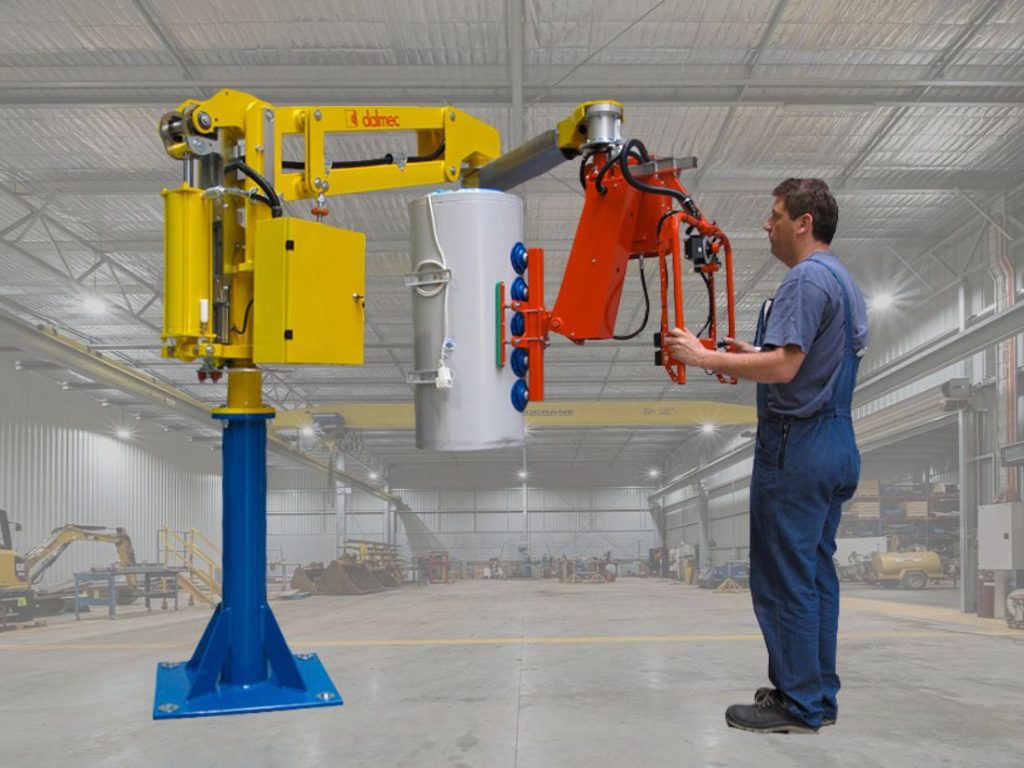
Home News Handling heavy and awkward loads is one of the biggest causes of musculoskeletal injuries in the workplace. For decades, Dalmec has been solving this challenge with customised industrial manipulators that combine precision, safety, and efficiency. Precision in Every Movement Our industrial manipulators are engineered to give operators complete control. Whether it’s tilting stacked drums, rotating large auto parts, or lifting packaging reels, every movement is smooth and accurate. Materials are positioned exactly where they need to be, reducing handling errors and improving workflow efficiency. Designed for Safety and Compliance Manual lifting in industries like construction, food processing, and manufacturing can lead to fatigue, strain, and injuries. Dalmec’s pneumatic, non-electric manipulators remove this risk. By taking on the weight, they protect workers, reduce musculoskeletal injuries, and maintain compliance with industrial safety standards. Adaptability Across Industries From flat metal sheets to delicate glass or even irregular components, our industrial manipulators adjust easily to different shapes and sizes. They provide precise rotating and tilting capabilities, ensuring accurate positioning without material damage. This adaptability makes them reliable across many industries. Decades of Expertise and Innovation With decades of experience and a commitment to innovation, Dalmec has established a global reputation for delivering reliable solutions that ensure smooth and efficient material flow. Our manipulators transform workplaces, reduce risks, and improve productivity. The Smarter Way Forward An industrial manipulator is more than equipment. It’s a safeguard against injuries, a boost to efficiency, and a commitment to worker well-being. At Dalmec, we make sure every unit meets the highest standards of precision, adaptability, and safety. Looking for a safer, smarter way to handle materials in Australia? Contact us and discover how our customised industrial manipulators can transform your workplace.
How Industrial Manipulator Can Pay for Itself in Under a Year
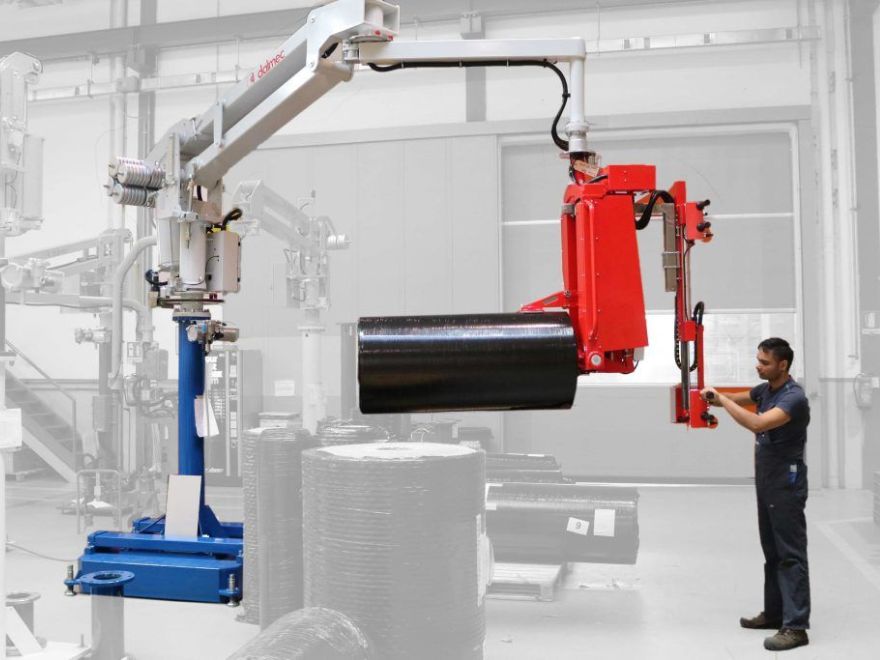
Home News Investing in an industrial manipulator may seem like a big decision, but for many Australian businesses, it pays off faster than expected. With the right equipment, such as a pneumatic Industrial Manipulator, you can boost productivity, reduce workplace injuries, and save significant operational costs, often recovering your investment in less than 12 months. 1. Increased Productivity from Day One Manual material handling, especially with heavy, large, or awkward loads, can slow down operations. An industrial manipulator eliminates the strain and inefficiency of manual lifting, allowing workers to move, rotate, and position items quickly and safely.In industries like manufacturing, metal fabrication, packaging, and logistics across Australia, this increased speed directly translates into higher output and faster order fulfilment, helping you recoup costs in record time. 2. Reduced Workplace Injuries and Associated Costs Musculoskeletal injuries from manual handling are one of the leading causes of lost workdays in Australia. By using a Dalmec Industrial Manipulator, you drastically reduce the risk of strains, sprains, and back injuries.Lower injury rates mean fewer workers’ compensation claims, reduced absenteeism, and less disruption to production, all of which help offset the cost of your investment. 3. Lower Staff Turnover Heavy manual handling can lead to staff fatigue and dissatisfaction, driving up recruitment and training costs. Dalmec offers industrial manipulators that support employees to focus on skill-based tasks rather than exhausting manual lifting, creating a safer and more attractive work environment. Over time, reduced turnover means substantial savings. 4. Versatility Across Applications From metal sheet handling to wood panels, glass, food products, and automotive components, industrial manipulators are adaptable to a wide range of industries. One piece of equipment can replace multiple manual handling tools, further reducing operational expenses. 5. High Durability Dalmec industrial manipulators are designed to last. With no complex maintenance requirements and the long-term cost savings are significant. Businesses across Australia have reported that these savings alone can contribute to a complete return on investment in under a year. More Than Just ROI The benefits go beyond financial returns. Load-handling equipment improves workplace safety, boosts morale, and ensures consistent quality. These long-term gains strengthen your business and make it more competitive in the Australian market. An industrial manipulator is more than just a piece of equipment — it is an investment in efficiency, safety, and the future of your business. While every operation is unique, the potential for a one-year payback period is a reality for many Australian companies. As a global leader in material handling solutions, Dalmec offers custom-engineered manipulators to suit your specific load, workspace, and safety requirements. Connect with us to explore how it can help your business.
Partner Equo Manipulator to Reduces Musculoskeletal Injuries
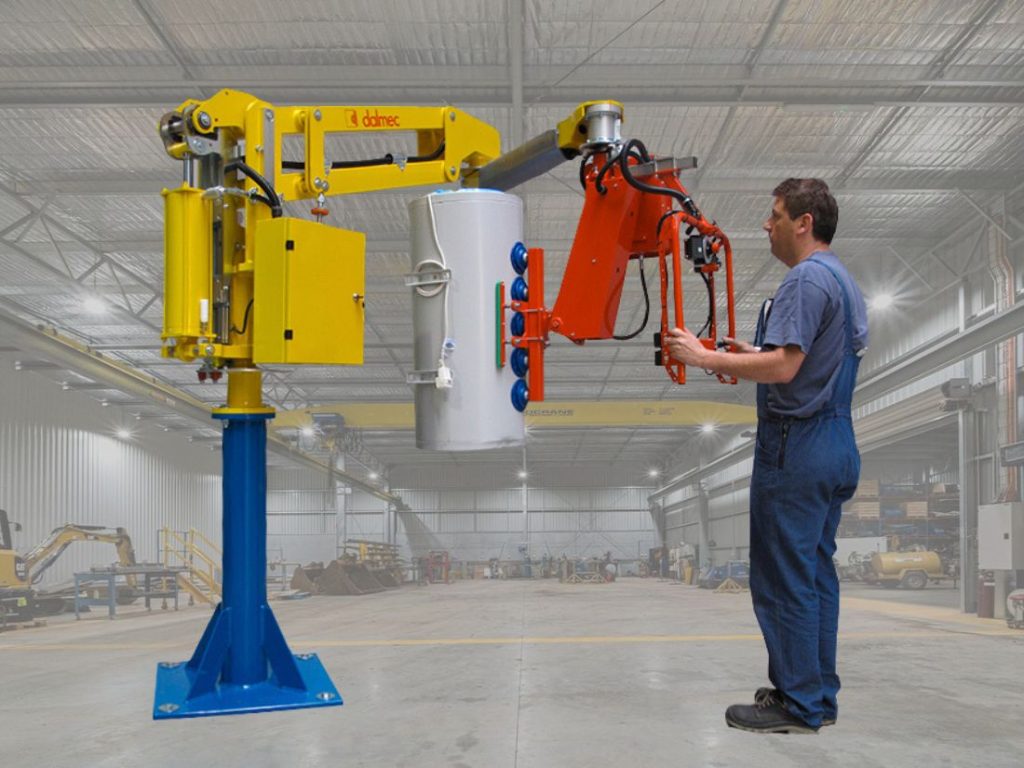
Home News In busy industries across Australia, lifting and moving heavy parts isn’t just tiring, it’s a serious risk for musculoskeletal injuries. That’s where the Partner Equo industrial manipulator changes everything. It transforms air into smooth, controlled motion thanks to pneumatic technology, making even the heaviest loads feel almost weightless. Making Work Safer and Easier Manual lifting often causes strain, fatigue, and injuries. The Partner Equo takes the pressure off workers by doing the heavy lifting. It has a maximum weight capacity of 550 kg and therefore can easily lift heavy objects. Operators can guide, tilt, and position materials effortlessly, reducing physical effort and helping prevent musculoskeletal problems. This is not just about lifting, it’s about creating a safer, more comfortable workspace where teams stay productive and healthy. Supporting Efficiency Across Industries The Partner Equo isn’t limited to one industry. Across automotive workshops, furniture production, metal fabrication, logistics, and more, it’s helping teams work faster and smarter. From moving car body parts and metal sheets to handling large wooden panels and crates, the Partner Equo adapts to different tasks with its custom gripping tools and ergonomic design. By making lifting almost effortless, it keeps teams fresh, focused, and less prone to mistakes. This leads to fewer delays and higher productivity without increasing physical demands on staff. Ergonomics Built In Manual lifting often leads to fatigue, mistakes, and injuries. The Partner Equo’s ergonomic design changes this. Workers guide and position materials effortlessly, reducing the risk of musculoskeletal injuries and fatigue. This means more focus, higher productivity, and fewer sick days. From Air to Action What makes the Partner Equo special is how it transforms simple compressed air into powerful, balanced movement. The pneumatic system removes the need for complex electronics, making it reliable and easy to maintain, perfect for busy Australian workshops and factories. Let’s talk about how the Partner Equo industrial manipulator can make heavy lifting easier and safer for your team. Contact us to learn more or explore a custom solution built around your needs.
Lifting Heavy Panels with Zero Effort? Meet the Maxipartner MX
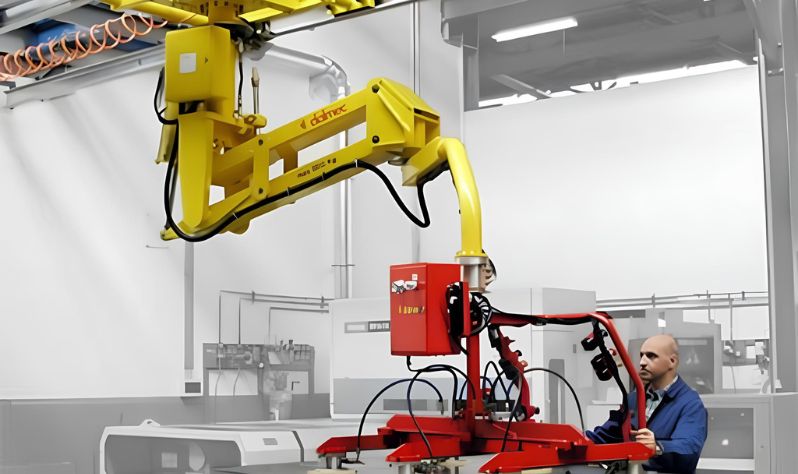
Home News Handling large, heavy panels is a big challenge in many industries, from automotive to construction. That’s why the Maxipartner MX industrial manipulator is a game-changer. With zero strain and full control, operators can lift, tilt, rotate, and place sheets effortlessly. Effortless Precision with PowerThe Maxipartner MX is built to manage loads up to 900 kg, with a reach of 4,500 mm and a vertical stroke of 2,200 mm, all using solely pneumatic power. Its balanced, articulated arm eliminates drift and gives smooth, steady motion. So, you get precise placement without shaking or jolting. Imagine lifting a van floor, tilting it into tight spaces, and aligning it flawlessly; that’s how working becomes almost effortless. This isn’t just lifting; it’s lifting with finesse. Perfect for Diverse EnvironmentsWhether you’re working in a workshop, factory, or on-site, the Maxipartner MX adapts seamlessly. Choose a column-mounted, fixed overhead, or trolley-mounted version depending on your space constraints and workflow. Because it relies on wet-free compressed air (0.7–0.8 MPa), you avoid complicated electronics and motor systems, keeping maintenance simple and operation smooth. Reducing Injuries and Boosting MoraleManual handling of heavy or awkward panels often leads to musculoskeletal injuries. By taking on that physical stress, the industrial manipulator keeps workers healthier and more productive. Over time, this also enhances worker satisfaction and retention. Tailored to Your NeedsDalmec works closely with your team to understand your workspace, load types, and movement patterns. We then build the Maxipartner MX to fit your exact needs, from grip tools to mounting style. During the prototype and simulation phases, we ensure it matches your process perfectly. A Smart InvestmentBy integrating a pneumatic industrial manipulator like the Maxipartner MX into your workflow, you: Protect your team from strain-related injuries Improve accuracy and finish quality Reduce damaged panels and rework Increase line throughput without more labour Discover how an industrial manipulator like the Maxipartner MX can make your sheet handling process efficient. Contact us today to see how we can customise a solution for your needs.
How Industrial Manipulators Simplify Handling Heavy Building Materials
Home News In the building industry, heavy lifting is a constant challenge. From tiles and blocks to concrete panels and steel frames, materials are bulky, uneven, and often dangerous to move by hand. That’s where industrial manipulators offer real value. They help simplify the handling of heavy items, improve safety, and increase overall productivity. A Smarter Way to Lift Manual lifting of building materials puts workers at risk. The weight, size, and awkward shape of many items can cause injuries, especially musculoskeletal injuries. Repeated strain and poor posture during lifting can lead to long-term health problems. Industrial manipulators reduce that risk. With pneumatic-powered arms and custom gripping tools, they make lifting feel effortless. Workers can move large tiles, stone slabs, timber sheets, and more with better control. Practical Handling Across Materials Building projects often involve a wide range of materials, each with its own handling challenges. For example, ceramic tiles and glass panels require a steady, secure grip to prevent cracks or damage. Sanitary items like sinks and toilets are bulky and fragile, needing careful positioning. Insulated materials, often light but awkward, must be held with balance and precision. Industrial manipulators can be adapted for all these materials. The gripping tools are designed to match the surface, shape, and weight of the load, ensuring safer handling and fewer material losses. This not only makes work easier but also reduces product waste on-site. Improving Safety and Efficiency Every construction site or factory must balance speed with safety. Industrial manipulators support both. By reducing manual handling, they lower the chance of injury. At the same time, they speed up the workflow. Materials can be picked, placed, lifted, or rotated without delay. The result is a safer, more productive environment. Teams can get more done without pushing their physical limits. Custom Solutions for the Building Industry No two projects are the same. That’s why we provide tailored solutions for the building industry. Our manipulators are built to suit your material types, workspace layout, and movement needs. Whether you need to lift ceiling panels overhead, rotate glass sheets, or tilt blocks into position, we offer smart, ergonomic tools to help you get it done right. Dalmec’s gripping tools are designed to adapt to materials with uneven weight or fragile surfaces. Supporting Safer Workplaces By reducing manual effort, industrial manipulators protect your team. They help lower injury rates, reduce fatigue, and allow more people to work safely, regardless of age, size, or experience. This makes the building industry more inclusive and sustainable over time. It also ensures that skilled workers stay healthy and productive. Discover how industrial manipulators can make your building operations safer and more efficient. Contact us to learn more about our custom solutions for the building industry.
How Safe Lifting Equipment Is Supporting Australia’s Manufacturing Comeback

Home News Australia’s manufacturing sector is gaining momentum. Policy initiatives such as Future Made in Australia and a renewed focus on local supply chains are driving growth across food, chemicals, defence, and industrial manufacturing. But growth brings pressure. Manufacturers are facing labour shortages, rising WHS costs, and the challenge of increasing output without increasing injury risk or workforce fatigue. One solution gaining traction across Australian factory floors is the use of industrial manipulators. These precision lifting systems are helping businesses lift safer, work more efficiently, and scale operations without adding headcount. The Hidden Cost of Manual Lifting Manual handling remains the leading cause of serious workplace injuries in Australia. According to Safe Work Australia, musculoskeletal disorders account for the majority of compensation claims in manufacturing environments. The impact is felt well beyond the injured worker: Lost time incidents and disrupted shifts Increased workers compensation and insurance costs Missed production targets Reduced workforce confidence and morale Even loads under 20 kg can cause long term injury when lifted repeatedly, awkwardly, or without proper mechanical assistance. Often, a single incident is enough to disrupt operations for weeks. The most effective way to reduce this risk is to remove the physical strain from the lift itself. What Is an Industrial Manipulator and Why Use One Industrial manipulators are pneumatic lift assist systems that allow a single operator to lift, rotate, tilt, and position heavy or fragile items with precise control and minimal physical effort. Unlike forklifts or fixed automation, manipulators are designed to integrate directly into existing workflows. They are ideal for confined spaces, irregular loads, and tasks where accuracy and operator control are critical. They are commonly used across: Food and packaging lines handling drums, buckets, and cartons Chemical and pharmaceutical facilities managing hazardous containers Sheet metal and fabrication environments handling panels and assemblies Defence and aerospace maintenance tasks requiring precision handling Systems can be floor mounted, column mounted, or overhead mounted, and are custom engineered to suit your layout, payload, and workflow.These solutions are used across a wide range of industries, from food and packaging through to defence and heavy manufacturing. How Manipulators Support Manufacturing Growth Australian manufacturers are under pressure to grow without overloading their workforce. Manual lifting slows workflows, increases fatigue, and adds long term injury risk. Industrial manipulators help by: Reducing manual handling injuries Converting two person lifts into safe one person tasks Improving WHS compliance and audit outcomes Maintaining consistent throughput in tight or complex work areas A common outcome reported by Australian manufacturers is improved safety paired with measurable productivity gains. “After installing a Dalmec manipulator, fatigue complaints dropped to zero and we reclaimed hours of production time each week.”Production Manager, Australian packaging facility Lift Safer, Waste Less, Operate Smarter Manual handling is not only a safety risk. It is also a productivity bottleneck. Dropped items, damaged product, spills, and operator fatigue all erode margins. With pneumatic Dalmec manipulators, operators are no longer lifting weight. They are guiding the load. This delivers: Smooth, damage free handling Controlled rotation and positioning for assembly or filling Fewer stoppages and more predictable output Many systems operate entirely on compressed air, with no electrics and minimal maintenance, making them reliable and well suited to demanding industrial environments. VLM and Dalmec Supporting Australian Industry VLM supplies Dalmec industrial manipulators across Australia and New Zealand, tailoring each system to the real world needs of local manufacturers. Our approach includes: On site assessment of lifting risks and workflows Custom tooling and gripper design Installation, training, and long term support With over 650 systems installed locally, many operating for decades, Dalmec manipulators are proven to deliver long service life, safety, and consistent performance in Australian conditions. Is It Time to Rethink Manual Lifting If your team is still manually lifting 16 kg or more, the risk is already present. The question is not if an injury will occur, but when. Whether you are preparing for growth or stabilising your workforce, addressing manual handling early protects both people and productivity. If you would like to explore safer lifting options, speak with our team to see how an industrial manipulator could be tailored to your operation. Let’s build safer, smarter, and more sustainable production floors, one lift at a time.