The Real Cost of a Manual Handling Injury in Electromechanical Assembly
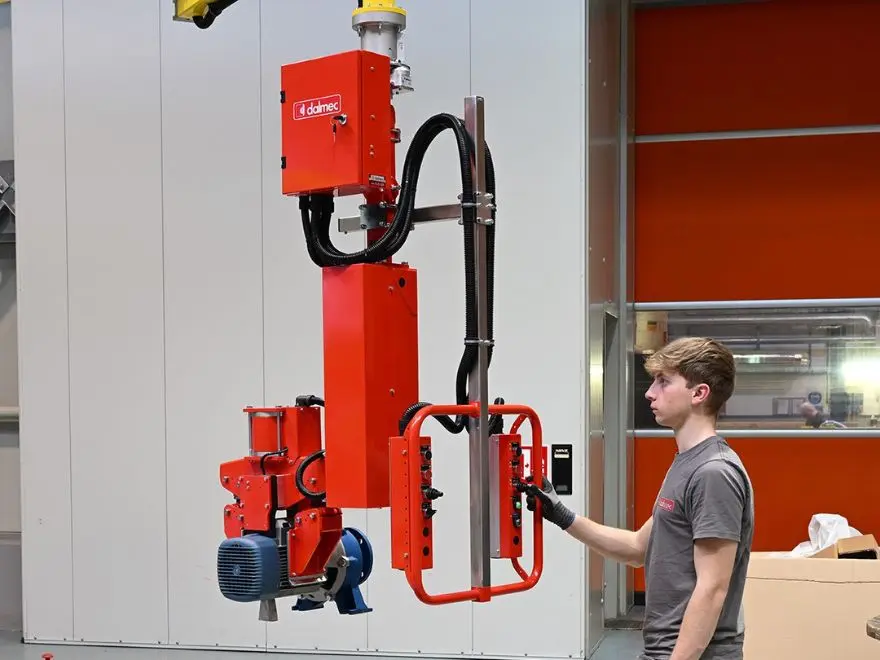
The Real Cost of a Manual Handling Injury in Electromechanical Assembly Home News Published by Vertical Lift Machines | September 2026 | Category: WHS / Manual Handling A claim is not the cost. It is the invoice for a cost the task was charging you all along. The motor weighs 45 kilograms. By the time the claim it causes is closed, it will be the cheapest thing involved. Electromechanical plants are full of parts like it. The wound stator the size of a spare tyre and more than twice the weight. The compressor that fits between two hands and pulls a back out through sheer density. The gearmotor with no grip points that gets carried against the chest because there is no other way to hold it. None of them look like a lifting problem. All of them are, because copper and steel pack more weight into less space than almost anything else made in a factory. So the lift never gets engineered. It looks like a carry, it gets treated like a carry, and it runs two hundred times a shift until the day it does not. Then the costs start arriving, and they do not stop at the claim. What one injury actually costs Talk to any plant that has been through a serious lifting injury and the claim itself is rarely what they remember. It is the stack that came with it. There is the claim. Then the lost time, and it is almost never a spare pair of hands that goes down; it is the experienced assembler whose output the bench was quietly built around. There is the premium that moves at renewal and stays moved for years. The overtime and labour hire covering the gap, usually at a higher rate than the wages they replace. The investigation, the reporting, the corrective-action paperwork, all of it landing on the same supervisors who are already covering the roster hole. And there is the quiet cost that never gets a line in any ledger: the rest of the team is now wary of the same task. The lift slows down. The informal two-person rule appears, which means two people are now tied up on a job that officially needs one. Throughput pays for the injury long after the claim is closed. It was never bad luck The instinct after an injury is to treat it as an event: something that happened, on a day, to a person. On a dense-load task that framing is wrong, and it is expensive. A hazardous manual task is defined by force, posture, repetition and duration. A compact 40 kilogram part carried close to the body, placed precisely, hundreds of times a shift, scores on every factor at once, and it does so on every cycle, not just the one that ends in a claim. The exposure was on your books the whole time. The injury is simply the moment it converts into an invoice. That is also why the fix is not another toolbox talk. We covered in an earlier article why a risk assessment on its own is not enough – admin controls change the paperwork around the lift, and PPE changes what the operator wears during it. Neither changes the lift. On a task that is dense, precise and repeated, only an engineering control does. The task runs two hundred times a shift. The injury was never bad luck. It was scheduled. Cost the task before it costs you You do not need an incident to put a number on the exposure. You need one walk of the line and three numbers per task: the load weight as the part is actually handled, the movement required, described as verbs and angles, and the lifts or placements per shift. Mark every station where a part is dense, carried close to the body, placed precisely, or quietly handled by two people. Those marks are your shortlist. Then, for the worst one, write the stack next to it: what a claim on this task would cost, whose lost time it would be, what the backfill looks like, what it does to the line’s pace. Most plants have never written that number down. It is usually the most persuasive document the site’s WHS case has ever produced, and it speaks the language your obligations are written in: the Safe Work Australia guidance on hazardous manual tasks is built around identifying force, posture, repetition and duration in the task, before harm occurs, not after. Bring the operators on the walk. The spec sheet says what the part weighs; the person who moves it two hundred times a shift knows which lift they feel at knock-off, which placement gets less square by mid-afternoon, and which job quietly became a two-person task without anyone writing it down. Their answers are the difference between a paper exercise and a shortlist your floor already agrees with. They are also the beginning of operator acceptance, which will decide later whether any control you install actually gets used. Be honest about the recurring costs while you write the stack. A premium does not move once; it moves at renewal and takes years of clean history to come back. Backfill labour is bought at market rates on short notice, not at the wages it replaces. And the slowdown around the task rarely ends when the injured person returns, because the informal two-person rule tends to stay. None of this needs to be forecast to the dollar. Written next to one task in plain language, it is already the clearest picture of exposure most sites have ever had. What removes the exposure: an engineering control Once the stack is written down, the hierarchy of control says what to do about it. A pneumatic industrial manipulator is an engineering control for exactly this class of task: the machine carries the full weight of the part, and the operator guides it with one hand. Grip strength, fatigue and posture stop being what holds the
Near Misses in Chemical and Drum Handling: The Injury Data You Are Not Collecting
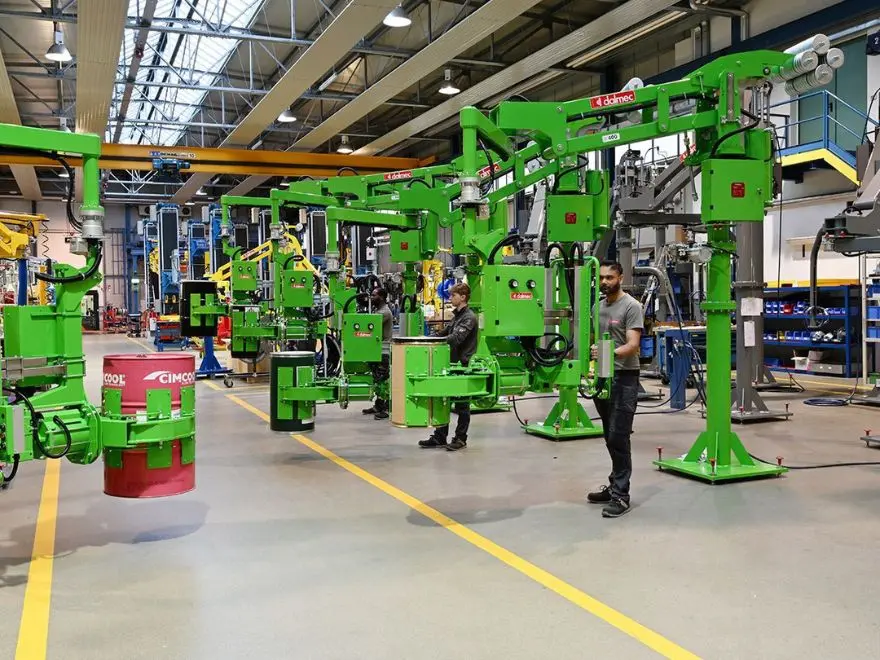
Near Misses in Chemical and Drum Handling: The Injury Data You Are Not Collecting Home News Published by Vertical Lift Machines | August 2026 | Category: WHS / Manual Handling A near miss is not evidence the system worked. It is evidence the injury is already in the post. Nobody writes up the drum that nearly went over. The grip that gave for half a second on a wet chime. The drum steadied against a thigh halfway through a tip. The second operator who stepped in because the angle looked wrong from across the bay. The IBC that swung wider than anyone expected coming off the forks. On a chemical or drum-handling floor these happen every week, and almost none of them make it into a report, because the form is for injuries and nobody was injured. So the incident register stays clean while the same task keeps producing the same moments, shift after shift. The paperwork says the floor is safe. The floor is saying something else. This is not a reporting-culture lecture. It is a measurement problem, and it has a practical fix: treat near misses as data, collect them for one month on one task, and let the count make the case the injury statistics cannot make until it is too late. What a Near Miss Looks Like in Drum Handling The textbook near miss is a dropped load that lands next to a boot. Real ones are quieter. On chemical and drum-handling tasks they look like this: A grip that slips and is caught – the drum is wet from washdown, oily from the line, or heavier than the label says because the product has settled. A drum steadied against the body – controlled with a hip or thigh halfway through a tip because two hands are not enough to hold the angle. An unplanned second person – someone jumps in mid-lift because one operator clearly cannot land it. Not a rostered team lift; a rescue. A rushed placement – the drum lands on the pallet or in the bund harder than intended because holding it any longer was not an option. A changed technique late in the shift – the lift that was done properly at 7am is done differently at 2pm, to spare a wrist or a back that is already feeling it. None of these produce an incident report. All of them are the same event as an injury claim, minus the timing. The force, the posture and the fatigue were all present. The only thing missing was the half-second where it goes wrong. Lagging Indicators Count Your Injuries. Leading Indicators Predict Them Most WHS reporting on chemical and drum-handling floors runs on lagging indicators: lost-time injuries, claims, days off work. They are accurate, auditable, and useless for prevention, because by the time a lagging indicator moves, the injury has already happened. Near misses are the leading indicator for manual handling, and regulators treat hazardous manual tasks as a risk to be managed before harm occurs, not after – the Safe Work Australia guidance on hazardous manual tasks] is built around identifying force, posture, repetition and duration in the task, not around waiting for a claim. A near miss on a drum lift is those risk factors photographing themselves a moment before the injury. Enough of them, on the same task, is not a run of luck. It is a schedule. One Task, One Month: How to Collect the Data You do not need a new reporting system, a software platform or a culture program to start. You need a clipboard, one task and one month. Pick the handling task your own people already talk about – the drum off the pallet and into the bund, the pour into the mixing vessel, the pails up to the mezzanine, the bags of powder into the hopper. Then count, for one month, four things: near-drops, loads steadied against the body, unplanned second-person assists, and visible changes of technique late in the shift. Tell the crew what you are counting and why. They will tell you things the count misses. At the end of the month you have something the incident register cannot give you: a number that describes the task, not the casualty. That number belongs in the risk register against the task, and it converts directly into the language your WHS obligations are written in – evidence that the hazard is known. You do not need an injury to prove the task is dangerous. The task has been telling you all month. What the Count Justifies: An Engineering Control Once the near-miss count says the task is a matter of time, the hierarchy of control says what to do about it. Admin controls – procedures, toolbox talks, rotation – change the paperwork around the lift. PPE changes what the operator wears during it. Neither changes the lift. An engineering control does. A pneumatic industrial manipulator is an engineering control for exactly this class of task: the machine carries the full weight of the drum, and the operator guides it with one hand. A tired grip cannot drop a load it is not holding. That is what our Dalmec industrial manipulators do on chemical and drum-handling floors: drums off pallets and into bunds, controlled tipping into mixing vessels, pails and kegs between stations, and containers on and off the line. The tooling is engineered to the part – chime grippers and parallel jaws for drums, controlled-tipping tooling for pours, clamp tooling for pails and kegs – and the balancing is tuned so the load floats and the operator only steers. The near-miss mechanisms disappear because the operator’s strength, grip and fatigue are no longer what holds the drum in the air. Where the movement is the hazard – rotation, tilting, precise placement – the engineering approach to the whole handling task covers that too: the rotation is pneumatic, the tilt is controlled, the placement is guided. Solved Before, at Scale Drum handling is not a
Manual Handling on Vehicle Assembly Lines: Why a Signed SWMS Is Not a Control
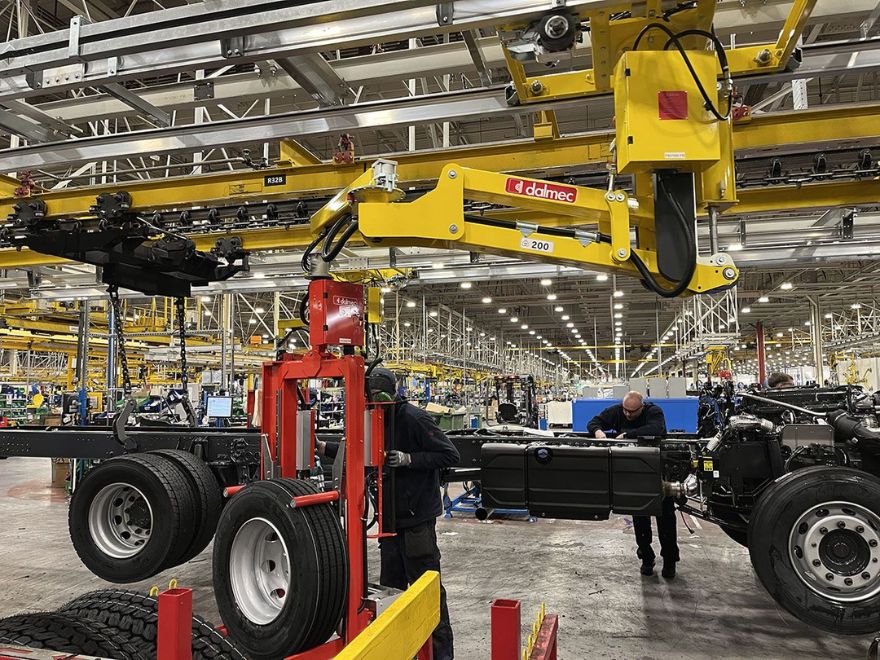
Manual Handling on Vehicle Assembly Lines: Why a Signed SWMS Is Not a Control Home News Published by Vertical Lift Machines | July 2026 | Category: WHS / Manual Handling A signed SWMS is not a controlled risk. It is a documented one. Under the WHS Act, those are not the same thing. Building a truck, a bus or a trailer is heavy work by design. Seats go in flat and come out vertical. Wheel-and-tyre assemblies run 60 to 80 kilograms and get lifted to the hub dozens of times a shift. Axles are rotated and placed by hand. Leaf springs are tilted into suspensions. EV battery packs are among the heaviest single parts on the vehicle. On most lines the paperwork around that work is clean: the risk assessment is current, the SWMS is signed, the rotation roster is on the wall. None of that is what a WorkSafe inspector assesses after a manual handling injury. They assess whether the hazard was controlled. On a vehicle line, the gap between a documented hazard and a controlled one is usually where the claim came from. This is not a documentation problem. It is a control problem. And the WHS Act is unambiguous about which one it requires. What the WHS Act Requires for Manual Handling on a Vehicle Line The WHS Act does not ask whether each lift was within a recommended weight limit, or whether your operators were trained, inducted and rostered through a rotation schedule. It asks whether you took all reasonably practicable steps to eliminate or minimise the risk. “Reasonably practicable” is a practical test, not an aspirational one. It weighs the benefit of a control against the cost of implementing it. For a repetitive heavy lift performed across a full shift on a vehicle line, an engineered handling solution spread across its service life is rarely disproportionate to the injury risk, the WorkCover exposure and the throughput inconsistency the manual task keeps generating. What a WorkSafe inspector assesses after a musculoskeletal injury claim is not whether the paperwork was in order. It is whether the employer knew the task created a risk, and whether they implemented the most effective control that was reasonably practicable. A rotation schedule and a signed SWMS do not settle that question in the employer’s favour when a mechanical solution was available. In practice, the first documents an inspector asks for are the risk assessment that identified the task and the record of what was done about it. A gap between the two is the finding. Why a SWMS and a Rotation Roster Are Not Controls A risk assessment identifies a hazard. A SWMS describes how to perform it. A rotation roster shares it around. None of the three reduces the hazard in the task itself. This matters on a vehicle line because the tasks are so repeatable. The lifts that show up on nearly every line: Seats – arrive flat, go in vertical through a narrow door, without scuffing trim. Light to lift, hard to place cleanly by hand, shift after shift. Wheels and tyres – 60 to 80 kg assembled, lifted, rolled and aligned to the hub, often two people, dozens of times a shift. Axles – heavy, and they have to be rotated and placed precisely onto a bench or into the vehicle. Leaf springs – long, heavy and awkward, needing a tilt to fit a heavy-vehicle suspension. EV battery packs – among the heaviest single parts on the vehicle, placed into the chassis to the millimetre. Rotate more operators through any of those and you have not reduced the risk. You have exposed more people to it. That is a scheduling decision, not an engineering control, and an inspector reads it that way. Where a Manipulator Sits in the Hierarchy of Control The hierarchy of control ranks risk management from most to least effective: Elimination Substitution Engineering controls Administrative controls – rotation schedules, training, SWMS, induction Personal protective equipment A risk assessment does not appear on that list. It precedes it – it identifies the hazard the hierarchy then has to address. When the assessment confirms a repetitive vehicle-line lift creates musculoskeletal disorder (MSD) risk, the Act requires you to implement the most effective control that is reasonably practicable. Engineering controls sit at level three. Administrative controls sit at level four. If a mechanical solution is available and affordable, documenting a rotation schedule does not substitute for it. A Dalmec pneumatic manipulator is an engineering control. It physically changes the task: the machine carries the weight, the operator guides the load. That is the difference between managing a hazard on paper and removing it from the task. What a Vehicle Assembly Line Demands From an Operator A vehicle assembly line is engineered for consistent throughput. It runs at the same pace in hour eight as in hour one. The battery pack does not get lighter as the shift goes on. The placement tolerance on a seat or an axle does not widen because the operator is tired. But the operator changes. Take a wheel-and-tyre station. A 70 kilogram assembly, lifted from a stillage, rolled to the hub, held level and aligned to the studs. At 7am it is a two-person job done cleanly. By the fortieth wheel the grip is tireder, the back rounds a little earlier, and the alignment gets rushed because the line does not slow down. Multiply one station by a shift, and a shift by a year, and the cumulative load on that team is enormous, none of it visible in the paperwork. Fatigue on a repetitive lift does not present as obvious exhaustion. It presents as small, invisible adjustments: a grip that shifts to spare a sore wrist, a lift that shortcuts a rotation to save the back, a pace that slips because holding the designed cycle time across eight hours is no longer physically possible. These adjustments are not a discipline issue. They are the MSD claim in progress – invisible
Manual Handling in Australian Manufacturing: Why Your Risk Assessment Is Not Enough
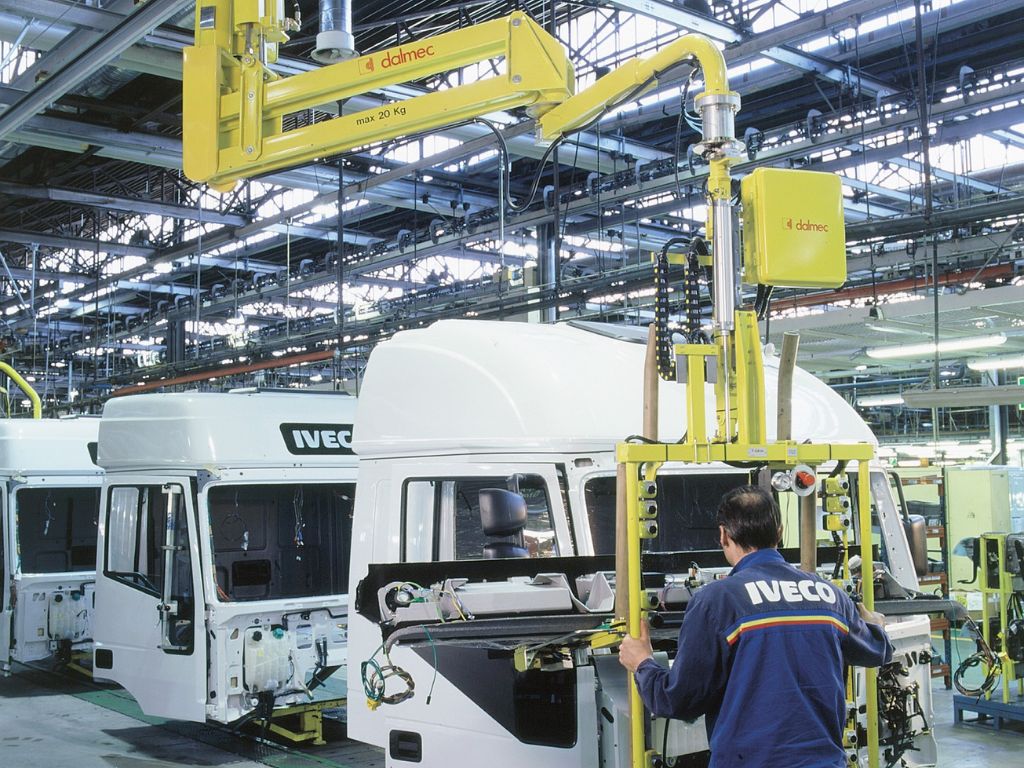
Home News A completed risk assessment is not a controlled risk. It is a documented one. Under the WHS Act, those are not the same thing. Under the WHS Act, those are not the same thing. And for most Australian manufacturing operations running repetitive heavy handling tasks, the gap between the two is where injuries are quietly accumulating. The paperwork is often clean. The risk assessment is current and signed. The induction records are complete. The rotation schedule is posted on the wall. But the task is still happening. The body is still absorbing it. By mid-afternoon, the operators who started the line at 6am are slower, less accurate, and carrying a cumulative physical load that no risk assessment modelled across a full eight hours. This is not a documentation problem. It is a control problem. And the WHS Act is unambiguous about which one it requires. What the WHS Act Actually Requires The WHS Act does not ask whether each lift was within the recommended weight limit. It does not ask whether your operators were trained, inducted, and rostered through a rotation schedule. It asks whether you took all reasonably practicable steps to eliminate or minimise the risk. “Reasonably practicable” is a practical test, not an aspirational one. It asks whether the benefit of implementing a control is grossly disproportionate to the cost. Yes. The cost of a mechanical solution, spread across its service life, is rarely disproportionate to the injury risk, the WorkCover exposure, and the productivity inconsistency that the task would otherwise continue to generate. What a WorkSafe inspector assesses after a musculoskeletal injury claim is not whether the paperwork was in order. It is whether the employer knew the task created a risk, and whether they implemented the most effective control that was reasonably practicable to implement. A rotation schedule and a signed SWMS do not settle that question in the employer’s favour when a mechanical solution was available. Why a Risk Assessment Is Not a Control Measure A risk assessment identifies a hazard. It does not control it. This distinction matters in practice. Many manufacturing facilities complete a risk assessment, confirm that a repetitive handling task creates musculoskeletal disorder (MSD) risk, and document administrative controls as though the obligation has been met. The controls section reads: rotation every two hours, induction complete, SWMS in place. That process does not satisfy the WHS Act. It documents that the hazard was identified. The obligation is to act on it. According to Safe Work Australia, musculoskeletal disorders are among the leading causes of serious workers’ compensation claims in Australian manufacturing. They accumulate over time — across repetitions, across shifts, across months — before a single injury is formally recorded. By the time a claim is lodged, the exposure that caused it has been building across dozens or hundreds of shifts. The most common documentation gaps in manufacturing risk assessments: Risk assessments that identify a hazard at the level of a single lift, not modelled across the cumulative exposure of a full shift Rotation schedules that move more people through a hazardous task, rather than reducing the hazard in the task itself Training records that satisfy an audit without reducing musculoskeletal exposure in the task SWMS documents that describe how to perform a hazardous task, rather than whether the task needs to exist in its current form Where the Risk Assessment Sits in the Hierarchy of Controls The hierarchy of controls ranks risk management methods from most to least effective: Elimination Substitution Engineering controls Administrative controls — rotation schedules, training, SWMS, induction Personal protective equipment A risk assessment is a diagnostic tool. It does not appear on this list at all — it precedes the hierarchy. It identifies the hazard that the hierarchy then addresses. When a risk assessment confirms a repetitive manual handling task creates MSD risk, the hierarchy requires you to identify and implement the most effective control that is reasonably practicable. Engineering controls sit at level three. Administrative controls sit at level four. If a mechanical solution is available and affordable, documenting a rotation schedule does not substitute for it. Many Australian manufacturing operations have risk assessments that correctly identify a hazard, then document controls only at level four. The gap between what the hierarchy requires and what has been implemented is precisely what a WorkSafe investigation examines after an injury claim. What a Production Line Actually Demands From an Operator A manufacturing line is engineered for consistent throughput. It runs at the same pace in hour eight as it does in hour one. The component does not get lighter as the shift progresses. The placement tolerance does not widen because the operator is fatigued. The line rate does not account for the physical state of the person running it. But the operator changes. Fatigue in a repetitive manual handling task does not present as obvious exhaustion. It presents as small, invisible adjustments: a grip position that shifts to relieve a sore wrist; a lift sequence that shortcuts a rotation to reduce back strain; a pace that falls slightly behind line rate because sustaining the designed cycle time across a full eight-hour shift is no longer physically possible. These adjustments are not a discipline issue. They are the MSD claim in progress. They are invisible until they result in a recorded injury — by which time the cumulative exposure has been building across dozens of shifts. The risk assessment did not model this. The rotation schedule does not resolve it. Moving the affected operator to a different task reduces that individual’s exposure, but the task continues, and the next operator begins absorbing the same load. A Dalmec pneumatic manipulator removes the variable. The operator guides the load. The machine carries the weight. Cycle time stays consistent from the first component of the shift to the last.
Manual Handling in Food Manufacturing: Why Your Rotation Schedule Is Not an Engineering Control
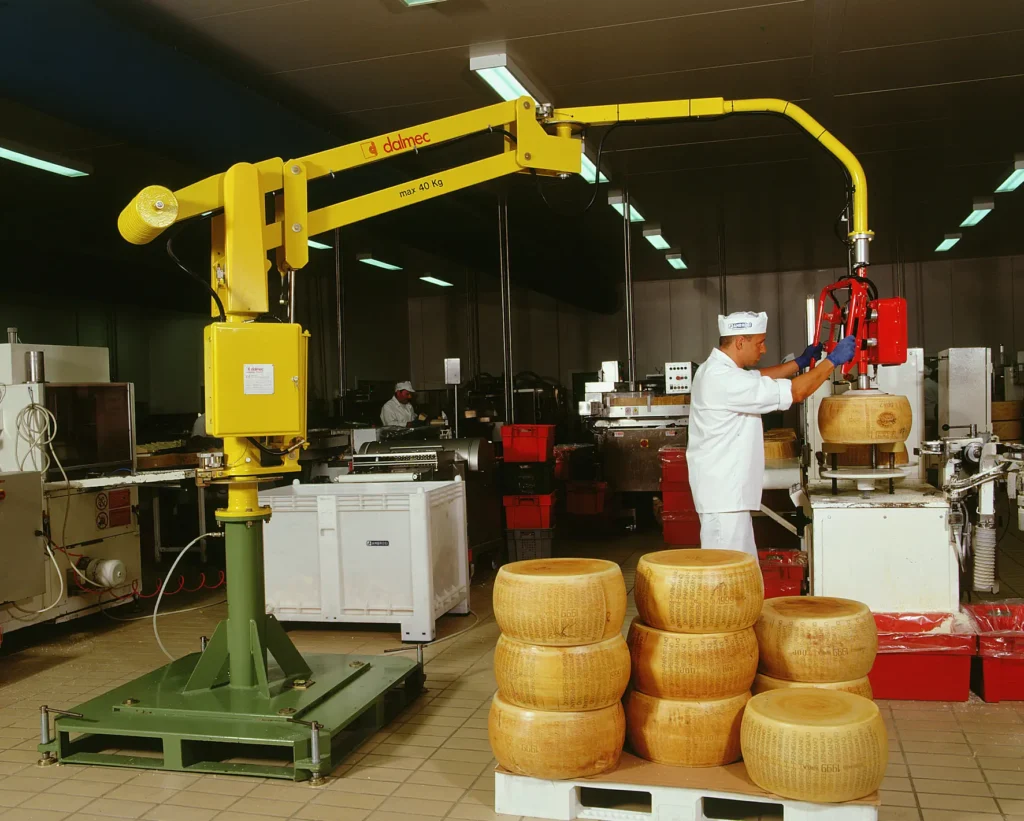
Home News There is a pattern we see on almost every food and beverage production floor we visit. The SWMS is current. The team has been trained. Rotation schedules are in place. Someone rotates off the heavy task every two hours. The paperwork is clean. The risk is still there. By 2pm, throughput is down. By 3pm, the operators who have been on the line since 7am are slower, less precise, and carrying a cumulative physical load that no rotation schedule reversed. The task is still happening. The body is still absorbing it. This is not a workforce problem. It is a task design problem. And the WHS Act treats it differently to how most food manufacturers have been managing it. What the WHS Act Actually Requires The WHS Act does not ask whether each lift was within safe weight limits. It does not ask whether your operators were trained or whether your SWMS was current. It asks whether you took all reasonably practicable steps to eliminate or minimise the risk. “Reasonably practicable” is not a high bar to clear. For a task done hundreds of times per shift on a food production line, an engineering solution that removes the physical demand is almost always going to be reasonably practicable. The cost of the control is measured against the probability of harm, the severity of that harm, and the benefit of the control. Purchase price alone is not the measure. When WorkSafe reviews a manual handling claim, or when your insurer asks what controls were in place for a known risk, the question is not “did you have a procedure?” It is “did you apply the highest practicable control on the hierarchy?” Our Dalmec solutions for food and beverage manufacturing page covers what that looks like in practice across common food production tasks. The Hierarchy of Controls: Where Your Rotation Schedule Sits The hierarchy of controls is not a suggestion. Under the WHS Act, it is the required framework for managing risk. From top to bottom: Elimination Substitution Engineering controls Administrative controls PPE Rotation schedules sit at level four. So does safe lifting training. So does a two-person lift requirement in your SWMS. Administrative controls manage how people interact with the hazard. They do not change what the task demands physically. They do not remove the hazard. They rely on consistent human behaviour across every shift, every day. Including the days when someone calls in sick and the rotation breaks down. An engineering control sits at level three. It changes the task itself. The physical demand is removed at the source, regardless of who is on shift, how long they have been on the line, or whether the rotation schedule ran on time. Under the WHS Act, if an engineering control is reasonably practicable, an administrative control is not sufficient on its own. It is not a matter of preference. It is a compliance gap. What It Costs to Carry the Risk Most operations managers underestimate the cost of a single manual handling claim. The workers compensation payment is the visible number. The real cost is larger. A serious musculoskeletal injury in food manufacturing typically involves: Direct costs: Workers compensation claim, medical treatment, rehabilitation Replacement labour: Backfilling a trained production operator, often with overtime or a labour hire rate Throughput loss: The line running at reduced capacity during recovery and retraining periods WorkCover premium movement: A significant claim affects your premium for three to five years Management time: Incident investigation, SafeWork notification, legal review, insurer liaison Safe Work Australia data consistently places body stressing injuries among the top causes of serious workers compensation claims in Australian manufacturing. The average cost of a serious claim, across direct and indirect costs, routinely exceeds the cost of an engineering control for the task that caused it. The question is not whether you can afford to install an engineering control. It is whether you can afford not to, and whether the WHS Act gives you the option to wait for a claim before acting. Our Manual Handling Risk Calculator can help you put a number on your current exposure before that conversation becomes necessary. What an Engineering Control Looks Like in Practice https://www.youtube.com/watch?v=2XtIXXiAtxU Dalmec industrial manipulators are not lifting aids in the traditional sense. They are custom-engineered systems that carry the full weight of a load — leaving the operator to guide it into position with minimal physical effort. The operator is no longer lifting. They are guiding. This is not a subtle difference. It is a fundamental redesign of the task itself. Dalmec systems are purely pneumatic — no electric motors, no hydraulics, no electronic drive systems. They are custom-engineered for each specific load, motion, and workspace. There is no off-the-shelf unit. Every system is built for the exact task it will perform, every shift, for the life of the installation. The Business Case, Before a Claim Forces the Conversation The food and beverage manufacturers who engage us on manual handling are almost never coming off a claim. They are WHS managers and operations leaders who have seen what happens elsewhere, or who have done the maths on what the task is costing them in throughput and fatigue. They acted before a claim made the decision for them. The conversation is always the same: load weight, motion, lifts per shift. From that, we can tell you whether a Dalmec solution is viable for the specific task, what it would cost, and what the likely payback period is against the risk you are currently carrying. For most high-repetition food production tasks, the numbers stack up. Typically within 12 to 18 months. If your operation has a manual handling task running all shift with no documented engineering control, send us the load weight, the motion, and how many times per shift it happens. We will give you a straight answer. Frequently Asked Questions Is a rotation schedule enough to satisfy WHS manual handling obligations in food manufacturing? No. A rotation schedule is an
Why Manual Handling in Your SWMS Is Not an Engineering Control
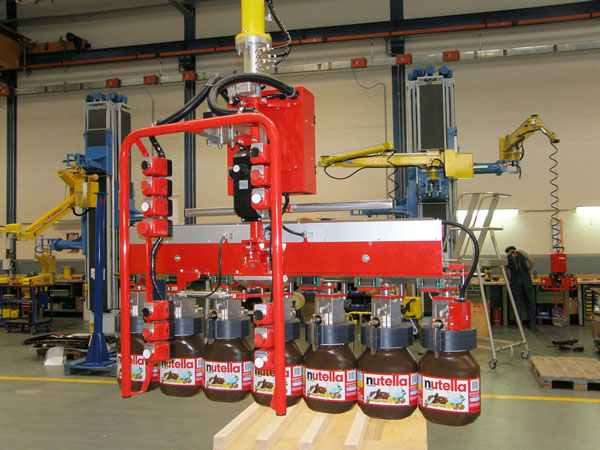
Home News Your SWMS is not keeping your workers safe. It is documenting why they got hurt. Cement bags. Steel components. Flooring rolls. Panels. Packaged materials. Workers lift, carry, position, and install them hundreds of times a day. Not occasionally — constantly, across every shift. Most businesses manage this with Safe Work Method Statements. And SWMS documents matter. They set expectations and guide behaviour. But there is a critical misunderstanding baked into most construction supply operations: Manual handling procedures in a SWMS are not engineering controls. This distinction is not technical housekeeping. It directly determines whether your workers get hurt, whether your WorkCover exposure grows, and whether your business is genuinely meeting its WHS obligations — or just documenting that it tried. Industrial manipulators eliminate repetitive strain at the source The problem with relying on a SWMS for heavy handling A SWMS typically includes instructions like: Use correct lifting technique Team lift for loads above a certain weight Rotate workers to reduce fatigue Take regular breaks These are administrative controls. They depend entirely on human behaviour, consistency, and physical capability. And under real operating conditions, those assumptions break down. Workers get fatigued. Loads are awkward and unpredictable. Repetition compounds the strain. Time pressure creates shortcuts. The best-written procedure in the world cannot override a tired body doing the same motion for the fifth hour straight. The risk is not the weight. The risk is weight multiplied by frequency multiplied by motion complexity. A 25kg panel lifted once is manageable. A 25kg panel lifted, rotated, and positioned eighty times per shift is a cumulative injury building quietly across every single cycle — even when every individual lift is technically within the safe limit. That gap between what the SWMS says and what the body experiences is where injuries happen. Where the SWMS sits in the hierarchy of controls Workplace safety in Australia is governed by the hierarchy of controls, which ranks risk mitigation from most to least effective: Elimination Substitution Engineering controls Administrative controls — including SWMS procedures and training Personal protective equipment Most construction supply operations sit at level four. Procedures and training. According to Safe Work Australia, musculoskeletal disorders — the injuries caused by repetitive manual handling — are the single largest category of serious workers compensation claims in Australia. The WHS Act is equally clear: where a risk cannot be eliminated, it must be minimised so far as reasonably practicable. Relying solely on administrative controls when engineering options exist does not meet that standard. What an engineering control actually is An engineering control physically changes the way a task is performed. It does not tell workers how to lift more safely. It removes or significantly reduces the need to lift at all. The shift in thinking is this: Instead of asking: “How do we train workers to lift this more safely?” An engineering control asks: “How do we redesign the task so the worker never carries the load?” That question leads to a different answer entirely. How Dalmec manipulators are engineered for construction supply tasks Dalmec as an engineering control Dalmec industrial manipulators are not lifting aids in the traditional sense. They are custom-engineered systems that carry the full weight of a load — leaving the operator to guide it into position with minimal physical effort. The operator is no longer lifting. They are guiding. This is not a subtle difference. It is a fundamental redesign of the task itself. Dalmec systems are purely pneumatic — no electric motors, no hydraulics, no electronic drive systems. They are custom-engineered for each specific load, motion, and workspace. There is no off-the-shelf unit. Every system is built for the exact task it will perform, every shift, for the life of the installation. https://www.youtube.com/watch?v=kdHeyswzMco The risk that does not show up until it is too late: cumulative strain One of the most expensive risks in construction supply is not a single dramatic incident. It is cumulative strain — the kind that builds across weeks and months before anyone calls it an injury. Even when every individual lift sits within acceptable limits, repetition compounds fatigue, micro-strain accumulates in joints and soft tissue, and injury risk rises gradually and invisibly. This is why so many manual handling injuries happen to experienced workers who have been doing the same task for years without incident. It is not that the task suddenly became more dangerous. It is that the body quietly ran out of tolerance. The hierarchy of controls exists precisely because administrative controls cannot fix this. Training tells workers how to manage the exposure. Engineering controls remove the exposure. Armstrong Flooring: what engineering control looks like in practice The difference between an administrative control and an engineering control becomes concrete when you look at a real application. At Armstrong Flooring in Braeside, Victoria, workers were handling 150kg PVC flooring rolls throughout every shift. Each roll needed to be lifted from storage, traversed across the workspace, rotated into position, and placed precisely for the next processing stage. With multiple workers and manual methods, the task introduced significant strain, inconsistency, and injury risk on every cycle. The engineered solution was a Dalmec industrial manipulator system configured specifically for this task: a 10-metre overhead running rail with a 7-metre working stroke, a motorised trolley for smooth horizontal movement, a custom jaw gripper for PVC rolls, and 90-degree motorised rotation for precise placement. Operated by a single person. Now, a 150kg roll is gripped, traversed the full 10 metres, rotated 90 degrees, and released precisely by one operator, every cycle, all shift. Physical strain reduced to near zero. Consistent handling on every cycle. A documented engineering control on record for the WHS file. That is not a procedure. That is a redesigned task. How Dalmec manipulators are applied across industrial sectors Signs your operation needs an engineering control, not another procedure Construction supply environments combine the conditions that make
Carton Handling in Warehouses: Redesigning Motion to Reduce Risk and Improve Throughput
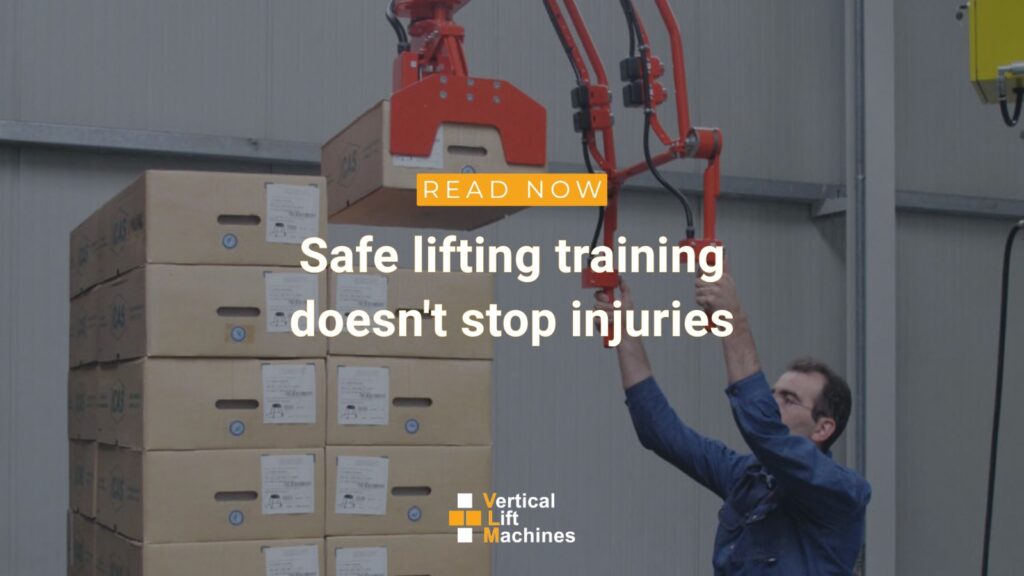
Home News Safe lifting training does not stop injuries. It just means the paperwork is in order when one happens. That line usually gets a reaction when I say it on a warehouse floor. But it reflects the reality most WHS managers and operations leaders already understand. Your team lifted that carton 400 times today. Tomorrow they will do it again. At what point does that stop being a lifting task and start being an injury waiting to happen? What I Saw on the Floor Last week I was in a warehouse watching a team move cartons from inbound pallets onto a packing line. Nothing unusual. The cartons were well within the stated manual handling weight limit. Everyone had completed safe lifting training. The process technically ticked every administrative box. But what I saw was a worker repeating the same reach, lift, rotate, and place motion hundreds of times across a shift. The lift was 12kg. The problem was it happened 350 times a shift. The carton itself was not the risk. The motion was. And that distinction is where most workplaces still get caught out. A repetitive handling task like this is exactly where a Dalmec industrial manipulator becomes the right engineering answer. Why Lifting Limits Are the Wrong Measure Most manual handling policies still revolve around weight limits. If the carton is under a certain number of kilograms, the task is considered safe enough, provided workers have been trained in correct lifting technique. That logic is deeply embedded in most workplaces. The problem is that injuries rarely come from a single heavy lift. They come from cumulative motion exposure. Manual handling risk is not weight. It is weight multiplied by frequency multiplied by motion complexity. A 10kg carton lifted once is a trivial task. A 10kg carton lifted 400 times in a shift is 400 repetitions of spinal loading, shoulder rotation, and grip force. Even if every lift is technically within limits, the cumulative exposure becomes significant over time. That is why warehouses with relatively light cartons still report high rates of musculoskeletal injuries. The risk sits in the frequency, reach distance, and awkward positioning. When I walk a warehouse floor, the first thing I watch is not the load but the motion pattern. How far is the worker reaching? How often is the lift repeated? Is the load rotated mid-air? Those are the variables that determine whether a task becomes an injury risk. What Motion Exposure Actually Costs By the time an injury claim appears, the real cost has already been accumulating for months. Injury Exposure Repetitive manual handling is the leading cause of serious workers compensation claims in Australia. Body stressing accounts for 34.5 percent of all serious claims. The average direct cost per claim is $16,300. When backfill, overtime, rehabilitation, and insurance premium increases are counted, the all-in cost typically sits between $50,000 and $100,000. As Safe Work Australia makes clear, employers are expected to manage handling risks, not just document them. Labour Retention Physically demanding roles drive turnover. People leave these roles and they rarely say why. They quietly stop putting their hand up for that shift, then stop showing up altogether. For a warehouse or production floor, losing a trained operator costs more than replacing them. The knowledge that walks out the door is harder to quantify than the recruitment fee. Productivity Loss Fatigue degrades performance as the shift progresses. Throughput drops, placement accuracy falls, and errors increase. Fatigue is not a personnel problem. It is a workflow design failure. What the WHS Act Actually Requires Under the Work Health and Safety Act 2011, employers have a duty to eliminate risks to health and safety so far as reasonably practicable. Where elimination is not possible, they must minimise the risk using the most effective controls available. Training is an administrative control. It sits near the bottom of the Hierarchy of Controls. Administrative controls rely on human behaviour. They assume workers will consistently apply the correct technique across hundreds of repetitions, often while fatigued, often under time pressure. Engineering controls sit much higher in the hierarchy because they remove the physical exposure at the source. They change the task itself rather than asking the worker to manage the risk within it. A documented engineering control is what a WHS manager needs when a regulator or insurer asks what the business did about a known manual handling risk. A training register does not close that gap. The Real Shift in Thinking For most operations, the question has always been: is the load within the lifting limit? The right question is: is this motion sustainable across an entire shift? When that question becomes the frame, the solution moves away from training and toward engineering design. Instead of asking how to train workers to lift safely, the question becomes how to redesign the motion so workers do not carry the load at all. That is the principle behind engineered motion control, and it is the difference between an administrative fix and a genuine engineering control. Why Cranes and Vacuum Lifters Are Not the Same Solution If a jib crane or overhead crane is the current solution for repetitive carton movements, it is likely managing vertical load only. Rotation, reach, and repeated fine placement require a different class of engineering control. Cranes lift. They do not provide controlled positioning through the full motion path. Other common substitutes, including vacuum lifters, balancers, and smart hoists, can assist with the load in simple applications. But they typically lack the controlled multi-axis positioning that a repetitive handling task requires. Industrial manipulators provide what those alternatives do not: Tilt and rotation under load Controlled handling of offset or awkward loads Precision placement at the end of the motion path Stability and repeatability across hundreds of cycles per shift The risk in a repetitive carton handling task is not just the weight. It is the motion. A tool that only addresses the weight leaves
Steel Handling Reinvented: How Smart Lifting Is Changing Fabrication Floors
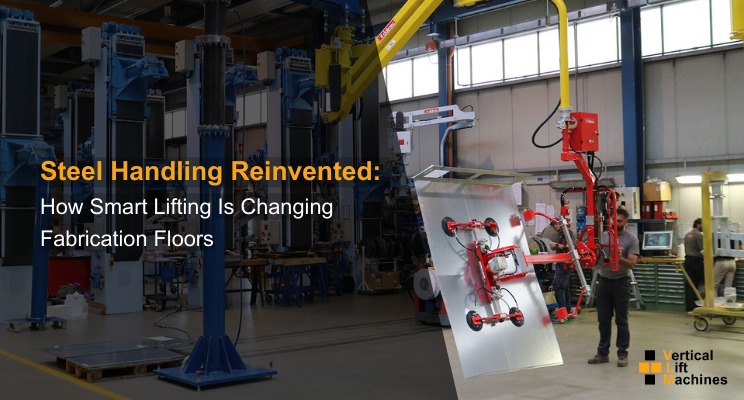
Home News Steel fabrication has always been about strength. But behind every beam, plate and sheet is work that demands far more than brute force. Steel is heavy, awkward and unforgiving. It flexes when lifted, shifts when rotated, and punishes poor control. Day after day, operators are expected to move it safely, precisely and repeatedly. That is where smart lifting changes the conversation. Rather than asking people to absorb the weight of steel through their bodies, industrial manipulators remove the physical load while preserving control. The result is safer handling, better accuracy and workflows that feel sustainable rather than exhausting. It is a shift that aligns not only with productivity goals, but also with recognised ergonomic and manual handling guidance such as NOHSC:2005 (1990). The real problem with steel is not just the weight Ask anyone on a fabrication floor and they will tell you the same thing. Steel handling is not only about how heavy a load is. It is about how unpredictable it can be. Large plates flex. Thin sheets behave differently to thick ones. Long beams demand balance through every movement. When these tasks are done manually, operators compensate with their bodies. Over time, that compensation shows up as fatigue, strain and injury. It also shows up in slower cycle times, damaged material and costly rework. Modern safety frameworks recognise this reality. Where high-risk manual handling exists, the expectation is not better technique alone, but mechanical assistance that reduces exposure at the source. What smart lifting actually looks like on the floor Smart lifting does not replace skill. It removes unnecessary physical effort so skill can be applied properly. Industrial manipulators use pneumatic balancing to neutralise the weight of steel components. Operators guide the load with light, controlled movement rather than force. Lifting, rotating and positioning become smooth and predictable actions. This is why industrial manipulators for precise and safe material handling are increasingly adopted in environments where control matters as much as strength. Instead of two people wrestling with a steel plate, a single operator can position it accurately. Instead of fatigue dictating the pace of work, consistency is maintained across the entire shift. Safety improves when effort is removed, not when people try harder One of the biggest misconceptions in industrial environments is that safety improves through awareness alone. In reality, safety improves when physical strain is designed out of the task. By removing load weight from the operator, industrial manipulators significantly reduce stress on shoulders, backs and wrists. This directly supports ergonomic risk management and aligns with established manual handling principles reflected in standards such as NOHSC:2005 (1990). This approach also delivers measurable commercial value. Reduced injuries mean less downtime, fewer lost-time incidents and improved retention of skilled workers. Ergonomic material handling becomes an investment rather than an expense because it addresses the root causes of risk and inefficiency at the same time Precision and productivity are not trade-offs In steel fabrication, accuracy is not optional. A few millimetres can mean the difference between a clean fit and expensive rework. Smart lifting supports precision by giving operators controlled movement across multiple axes. Steel components can be aligned, rotated and placed without sudden shifts or overcorrection. This improves quality while also speeding up the process. When effort is reduced, motion becomes more efficient and cycle times shorten naturally. In many operations, tasks that once required two people can be completed by a single operator in a fraction of the time, without increasing risk or fatigue. Designed around real fabrication workflows No two fabrication floors are identical. Steel handling varies by size, thickness, shape and stage of production. Effective lifting systems must adapt to that reality. Dalmec manipulators are engineered around real workflows, not generic assumptions. Solutions such as the Dalmec Partner EQUO are designed to handle heavy and off-centre steel loads while maintaining balance and intuitive control throughout the lift. This adaptability allows lifting systems to integrate seamlessly into existing processes, supporting productivity without disrupting established workflows. For teams planning or reviewing steel handling processes, the Steel Fabrication interactive resource page brings together application-specific images and videos in a format that can be explored visually. Users can scroll through real steel fabrication images and watch videos to better understand how different lifting solutions are applied across fabrication workflows before moving into detailed design discussions. Supporting people as well as production When the physical strain of steel handling is reduced, the benefits extend beyond injury statistics. Operators experience less fatigue. Confidence improves. Skilled workers remain productive for longer and demanding roles become more sustainable. Smart lifting systems support compliance, but more importantly, they support people. They allow experience and skill to be applied consistently without being limited by physical wear. A smarter way forward for steel handling Stealing the weight from steel is not about automation for its own sake. It is about creating safer, more precise and more sustainable fabrication environments. By combining ergonomic design, controlled movement and application-specific engineering, industrial manipulators change how steel handling feels on the floor. The work flows better. Risk is reduced. Results improve. To explore how smart lifting could improve safety and efficiency in your steel fabrication operation, visit our solutions page and speak with our team.
7 Essential Questions to Ask When Choosing a Material Handling Partner
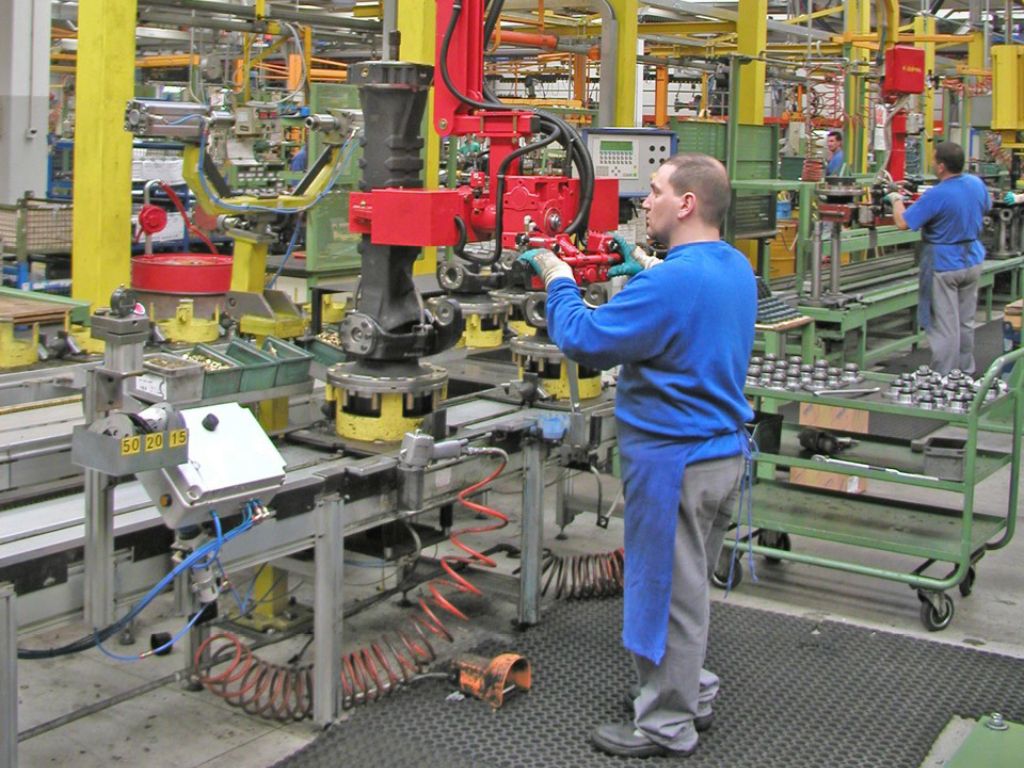
Home News Choosing the right material handling partner can dramatically improve safety and productivity in your operation. By asking the right questions up front, you’ll ensure any lifting solutions you invest in actually solve your challenges and boost your bottom Line. For operations managers and plant engineers, the start of a new year is a critical time for strategic planning. You’re likely evaluating workflows, pinpointing bottlenecks, and looking for ways to improve safety and production efficiency. If heavy, awkward, or fragile loads are part of daily life on your factory floor, you might be considering new safe material handling methods or lifting solutions (like industrial manipulators) to protect workers and streamline work. But selecting the right material handling partner is just as important as choosing the right equipment. There are plenty of off-the-shelf hoists and lifters out there, but a generic gadget rarely delivers true improvement. Real gains come from partnering with a provider who understands your unique environment and can tailor a solution to fit. Below, we outline seven key questions to ask any potential partner. These go beyond simple pricing and lead times – they dig into the engineering depth, safety features, and long-term support a provider will bring to your facility. 1. Will the Solution Be Customised for Your Product’s Needs? Many suppliers take a one-size-fits-all approach – they’ll ask the weight of your load, check a chart, and recommend a standard hoist or balancer. The truth is, weight is often the easiest variable in material handling. The real challenges are your product’s shape, size, surface texture, fragility, and the exact movements required to lift and place it. If a provider only offers a cookie-cutter device, you risk an ill-fitting solution that doesn’t truly solve your problem. Ask if they can design tooling specific to your item. A true partner looks not just at what you’re lifting, but how it needs to be lifted. Can they create custom end-effectors – the gripping attachments – tailored to your product? For example, lifting a large roll of film by its core or handling a thin-walled stainless steel drum without denting it requires specialised tooling. A basic hook or clamp won’t cut it for these scenarios. Look for deep customisation capabilities: The partner should be able to engineer bespoke gripping tools (e.g. vacuum suction cups, internal expansion mandrels, custom clamps) designed for your product’s exact dimensions and material. Ask about complex manoeuvres: If your process involves flipping a load from vertical to horizontal, reaching over obstructions, or rotating an item to slot it onto a shelf, the system must handle shifts in the load’s centre of mass without becoming unstable. Ensure the provider can accommodate these unique lifting motions in their design. When a supplier builds the solution around your product – instead of forcing your product to fit their standard device – you’ll see gentler handling, less product damage, and faster cycle times. 2. How Will It Integrate into Your Workspace and Workflow? No factory or warehouse is a blank canvas waiting for new equipment. Your facility likely has a crowded floor plan with existing machinery, conveyor lines, structural columns, narrow aisles, and perhaps low ceilings. A lifting device might sound great on paper but prove impractical if it doesn’t physically fit or if it obstructs operations. So, it’s critical to consider how a new manipulator or lift will work within your current layout. A reliable partner will view their equipment as part of your overall workflow – essentially the bridge between workstations – rather than a standalone island. Ask each vendor how they address spatial constraints and what mounting options they offer. For instance, if a supplier only provides floor-mounted systems, they won’t be much help if you need to keep aisles clear for forklift traffic or if floor space is at a premium. Verify mounting flexibility: Can the system be floor-mounted, column-mounted, or ceiling-mounted? Top providers offer options like overhead rail systems or jib cranes that utilise ceiling space to cover large work areas without blocking the floor. If you have narrow aisles or multi-station coverage needs, an overhead running rail manipulator might be ideal. Check vertical adaptability: If your facility has low ceilings or obstacles (like HVAC ducts, pipes, or mezzanines), a standard tall post or gantry may not fit. In such cases, can the partner engineer a low-profile, rigid-arm manipulator that reaches into tight spaces or under obstructions? The solution should adapt to your building constraints – for example, a rigid arm that can dip under a low overhead or a compact mast that fits beneath the ceiling – where a typical cable hoist would fail. By ensuring the equipment is designed for your workspace – not just for the load – you avoid costly surprises at installation. The right device will slot into your operations smoothly, acting as connective tissue that streamlines material flow instead of a bulky addition that gets in the way. 3. Does It Empower Your Operators (Not Replace Them)? In the rush toward automation, it’s easy to assume a fully robotic solution is best for material handling. But in many complex assembly or packing tasks, the human operator is indispensable. There’s no substitute for human judgment when, say, aligning a part during assembly, dealing with inconsistent packaging, or spotting quality issues on the fly. The ideal material handling solution gives your workers the strength and support of a machine while preserving their skill and control. When evaluating a partner, discuss how their technology interacts with the user. You’re not looking to make your workers redundant – you want to augment their capabilities. The manipulator or lifting device should feel like an extension of the operator’s arm, not a clunky robot that isolates them from the task. If the operator feels disconnected or wrestling with controls, productivity and safety can suffer. Prioritise intuitive controls: Look for equipment that is naturally easy to use. The best manipulators allow the operator to guide and position a load with minimal effort
Helping Australian Companies Retain Skilled Workers with Industrial Manipulators
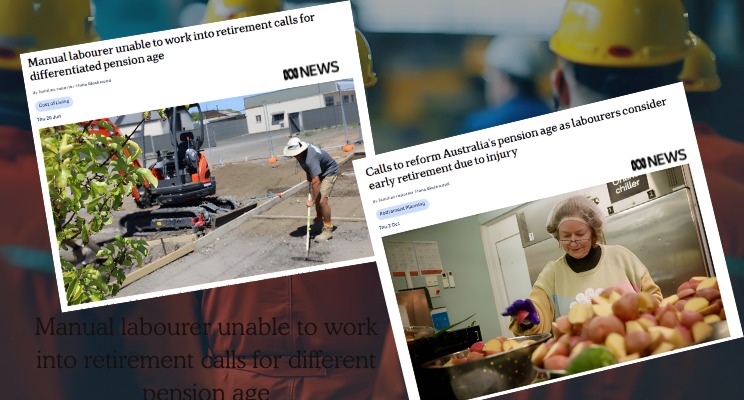
Home News Across Australia, many industries are struggling to find and keep skilled workers. As the pension age continues to rise, conversations are growing around whether reforms are needed for physically demanding jobs. In manufacturing, logistics, and other labour-intensive sectors, employees often handle heavy loads daily. Over time, this repetitive strain can lead to injuries, fatigue, and even early retirement. Skilled workers who would otherwise continue contributing for years are forced to leave because their bodies can no longer keep up with the demands of manual work. This is where industrial manipulators offer a practical and lasting solution. At Dalmec, we design industrial manipulators that take the physical strain out of material handling. Our systems use pneumatic technology and ergonomic designs to lift, tilt, and position heavy items from glass panels to metal components with precision and control. By integrating manipulators into their operations, many Australian companies have seen a major shift in workforce stability. Employees who were once considering leaving due to the job’s physical demands are now able to continue working comfortably and safely. When the heavy lifting is removed, retention improves. Moreover, with the current labour shortage across Australia, retaining experienced workers has become just as important as hiring new ones. Industrial manipulators not only prevent injuries but also help companies maintain productivity and reduce training costs associated with high staff turnover. The discussion around Australia’s pension age highlights a deeper issue: the need to create workplaces where people can work longer, without risking their health. Technology like industrial manipulators plays a key role in achieving that balance by protecting employees and supporting sustainable operations. Work shouldn’t be a reason for early retirement. With the right equipment, it can be safer, smarter, and more rewarding for everyone involved. Looking to create a safer, more sustainable workplace?Visit our website and discover how Dalmec industrial manipulators can help your team.